Khadijat Busola Amolegbe
Associate Professor, Department of Agricultural Economics and Farm Management, University of Ilorin
Khadijat Busola Amolegbe is an agricultural and development economist and an Associate Professor of Agricultural Economics at the University of Ilorin, Nigeria, where she serves as the Acting Head of the Department of Agricultural Economics and Farm Management. She is also a Consultant Economist with the World Bank Group, where she contributes to the Nigeria Poverty and Equity Assessment Report and conducts small area estimation to support local-level policy targeting. In addition, she provides analytical, research uptake and policy engagement support to the Africa Gender Innovation Lab. Her broader consulting experience includes work with the University of Georgia, Mathematica, and the Nordic Africa Institute. She is a former Structural Transformation of African Agriculture and Rural Spaces (STAARS) Research Fellow at Cornell University and a research fellow at the International Institute of Tropical Agriculture (IITA). She has received numerous competitive grants and awards, including support from the United States Agency for International Development (USAID) Feed the Future Advancing Local Leadership, Innovation and Networks (ALL IN) initiative. She has published widely in top academic journals and her work has been featured across several media platforms.
Recent work by Khadijat Busola Amolegbe
-
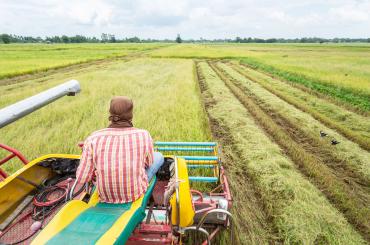
Why Nigeria's smallholders remain stuck: Seeds, credit, and missing data
Despite contributing nearly a quarter of GDP and employing half the workforce, Nigeria's agricultural sector is trapped in low productivity by mutually reinforcing barriers: dysfunctional seed systems, credit market exclusion, absent farmer registrie...
Published 25.06.26
-
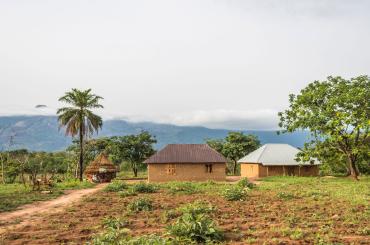
Institutions, not innovation, are the barrier to Nigeria’s agricultural productivity growth
Nigeria’s agricultural productivity deficit stems from overlapping institutional failures across seed supply, credit, insurance, extension, market access, and land tenure that collectively prevent smallholder farmers from adopting or benefiting from ...
Published 25.06.26