

Methods & Measurement
-
Making high-quality data accessible and usable
The data ecosystem is flawed. Fixing it requires hard work to overcome many barriers. Data Basis has done exactly that to build a public good that puts data in people’s hands.
-

The state of play in development economics research
What do we know about the methods, funders and focus of development economics research?
-

Micro vs macro, academic consensus, and impactful careers in economics
Rachel Glennerster on what should development economists be working on – and how does their work actually reach the people making decisions?
-

An improved nighttime-lights dataset for development research
A new adjusted and harmonised satellite nighttime-lights series for 1992–2023 tracks local development in the Global South more accurately than the off-the-shelf data – especially in panels and at fine spatial resolution.
-
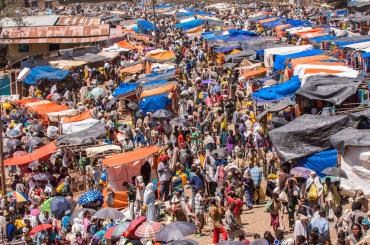
Monitoring markets from space
Tracking rural markets using satellite imagery offers a new way to monitor economic conditions in remote, data-scarce regions – as demonstrated by a new research paper and online dashboard.
-
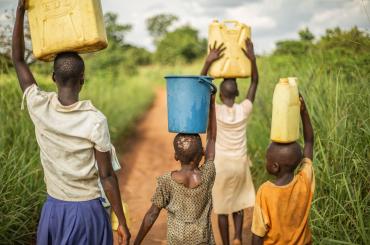
What the $1-a-day global poverty line gets wrong
The $1-a-day poverty line has long understated the true scale of global poverty. New research proposes a $21.50-a-day upper bound that would shift the focus of development policy towards broad-based economic growth.
-

Aggregating economic research
Rafe Meager on aggregating evidence in the social sciences, the research process, and how to read results.
-

Scaling evidence-based programmes is as much art as it is science
Scaling evidence-based education programmes requires identifying the non-negotiable components that drive impact and adapting everything else to fit within government systems. Sustainable gains depend on embedding the underlying principles into polic...
-
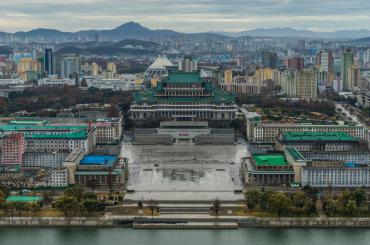
North Korea's economy: The study of economic black holes
When official statistics are unavailable or unreliable, researchers can use a range of forensic methods – such as satellite imagery, mirror trade data, price monitoring, refugee surveys, humanitarian data, and text mining – to extract credible econom...