



This week we featured research on export-led growth, populism, digitalisation, politics and more...
Sign up here to receive our weekly newsletter and updates on our upcoming VoxDevLit launch events straight to your inbox.
This week we released Issue 2 of our VoxDevLit on Informality. In this issue, Gabriel Ulyssea, and Co-Editors Matteo Bobba, Lucie Gadenne and Mariaflavia Harari, summarise findings from research on the informal sector, including new sections outlining evidence on informal housing and more. Gabriel Ulyssea and Nina Harari discuss what we have learned from research on informality in this week's companion podcast.
On Wednesday, Francesco Amodio, Giorgio Chiovelli, and Serafín Frache discussed how a surge in beef exports to China triggered widespread growth in Uruguay’s service sector.
Why do policymakers choose education reforms that aren’t supported by evidence? And how can researchers work with them to implement interventions with better outcomes? Stefan Dercon discusses the political economy of education research.
An unprecedented gender gap in political preferences has emerged in many countries. Laura Barros and Manual Santos Silva present evidence from the 2018 Brazilian presidential election, showing that labour market shocks which disproportionately affect men can increase support for right-wing populist candidates who embrace traditional masculine values.
Digitalisation reforms have become a popular policy tool in developing countries. In Pakistan, however, Shan Aman-Rana and Clement Minaudier find that digitising land records can have unintended consequences on bureaucratic behaviour and, in turn, tax collection.
In Afghanistan, Erkmen Aslim, Rafiuddin Najam, and Erdal Tekin outline evidence on how girls exposed to war violence in utero suffer long-term setbacks in learning and development.
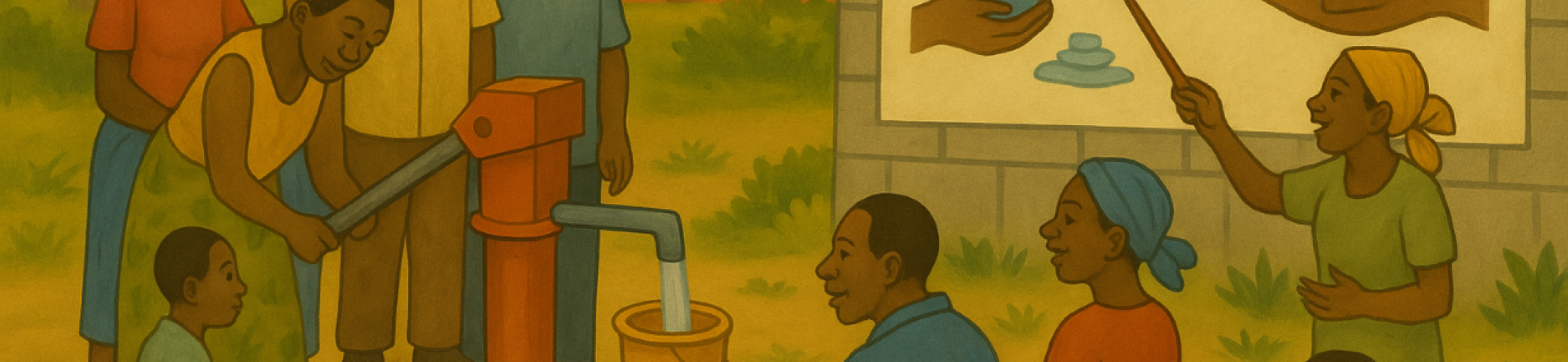
In today’s article, John Quattrochi, Kevin Croke, Caleb Dohou, Luca Stanus Ghib, Yannick Lokaya, Aidan Coville, and Eric Mvukiyehe provide evidence from a community-led water, sanitation, and hygiene programme which improved access but was unable to protect child health in the Democratic Republic of Congo.
How will climate change impact Bangladesh? How should policymakers respond to the growing threats of climate change? Nusrat Jahan reflects on the state of climate adaptation in Bangladesh.
Elsewhere in development, three interesting blogs on CGDEV:
- Han Sheng Chia, Samantha Carter, Farhan Abrol, Temina Madon, Robert On, James Walsh and Zezhen Wu outline their AI Evaluation Framework for the Development Sector.
- Rachel Glennerster and Siddhartha Haria call for a radical simplification of foreign aid, as a practical way to get more out of limited budgets.
- Vijaya Ramachandran writes that the World Bank’s “All of the Above” approach to energy in poor countries is a welcome change.