M Niaz Asadullah is a Visiting Professor of Economics at the University of Reading, UK; an Adjunct Professor at the College of Population Studies (CPS), Thailand; a Research Fellow at the IZA Institute of Labor Economics and serves as the Southeast Asia Lead for the Global Labor Organization (GLO). His academic career includes a decade in Malaysia, where he was a Professor of Economics at Monash University Malaysia and the University of Malaya, serving at the latter as Deputy Director of the Centre for Poverty and Development Studies (CPDS). His research career also includes positions with the Research and Evaluation Division (RED) of BRAC and the Institute of Governance Studies at BRAC University. He has held visiting researcher positions at Harvard University’s Center for International Development, the Bangladesh Institute of Development Studies (BIDS), the University of Manchester, and Mindanao State University in the Philippines. In addition to his academic work, he has held several high-level policy advisory positions across South and Southeast Asia. In 2025, he served the Interim Government of Bangladesh as Head of the Taskforce on ICT Sector Corruption and as a Member of the Manpower Sector Taskforce. His prior experience includes serving as an Advisor to the Minister for Food and Agriculture (MAFI), Government of Malaysia, and as an Advisor on Behavioural Insights for the Malaysia Productivity Corporation (MPC). His research focuses on the economics of education, labor, gender, and governance, with a specific emphasis on South and Southeast Asia.
Recent work by M Niaz Asadullah
-

Five reasons growth didn’t translate to well-being in Malaysia
In recent decades, Malaysia achieved rapid inclusive growth, yet focus group discussions with Malaysian citizens across the country have reported stagnating living standards and rising dissatisfaction. This disconnect reflects pressures not captured ...
Published 11.03.26
-
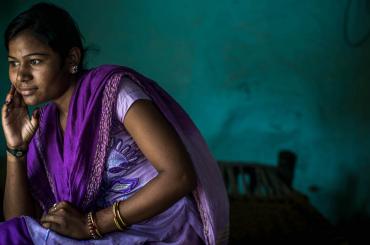
Can laws change attitudes and behaviours around child marriage in the absence of strict enforcement? Experimental evidence from Bangladesh
A video experiment uncovers the potential pitfalls of relying on legal reforms alone to reduce female early marriage in low-income countries
Published 08.03.21
-
Early marriage and the persistence of traditional gender norms
Research in Bangladesh shows how early marriage contributes towards women expressing more traditional gender attitudes
Published 11.03.19