
Marc Muendler
Professor, Department of Economics, UC San Diego
Marc-Andreas Muendler, Ph.D., is a Professor in the Department of Economics at the University of California, San Diego. His fields of interest include international trade, international finance, and development economics. Dr. Muendler has worked as a Consultant to the World Bank and private businesses, and as a Consulting Researcher for the Brazilian labor Ministry, the Brazilian census bureau, the German central bank and the Federal Reserve Bank of New York. Dr. Muendler was a Peter B. Kenen Research Fellow at Princeton University in 2008-09. He received his Ph.D. in Economics from the University of California, Berkeley.
In the area of international trade Marc Muendler investigates how falling trade barriers affect local industries and labor markets. Much of Muendler's research uses novel linked data that identify firms and their individual workers over time. Muendler analyzes the dynamics of globalization on a worldwide scale using global data that track industries by country over five decades and models that incorporate trade dynamics. In his research on firm dynamics and entrepreneurship Muendler analyzes how firms access global destination markets by launching an optimal set of products, how potential exporters hire workers with crucial skills in preparation for foreign-market access, how new firms enter, and how export-market exposure trains workers and their portable skills.
Recent work by Marc Muendler
-
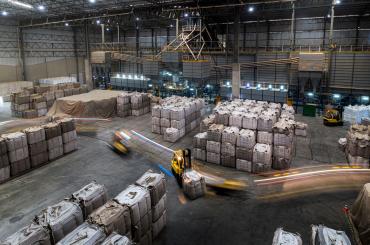
Why workers at exporting firms learn and earn more
Workers at exporting firms experience more rapid skill and productivity growth, especially when firms export to high-income destinations, thereby amplifying the overall gains from trade.
Published 04.11.25
-
The impacts of expanding credit on firm entry and growth in Brazil
Economy-wide expansion of credit for SMEs in Brazil induced entry of more capable firms but did not change employment at the municipal level
Published 25.01.24
-
Trade and inequality: From theory to estimation
Starting from a closed economy, trade liberalisation increases wage inequality; as costs fall further, wage inequality peaks and also starts to fall
Published 09.10.17