Pinelopi Goldberg
William Nordhaus Professor of Economics and Global Affairs, Yale University
Pinelopi (Penny) Koujianou Goldberg is the William Nordhaus Professor of Economics and Global Affairs and an Affiliate of the Economic Growth Center at Yale University. She holds a joint appointment at the Yale Department of Economics and the Jackson School of Global Affairs. From 2018 to 2020, she was the Chief Economist of the World Bank Group. Goldberg has served as President of the Econometric Society, Vice-President of the American Economic Association, and Editor-in-Chief of the American Economic Review. She is member of the National Academy of Sciences and the American Academy of Arts and Sciences, Distinguished CES (Munich) Fellow for 2024, recipient of Guggenheim Memorial Foundation and Sloan Research Fellowships, and recipient of the Bodossaki Prize in Social Sciences. She is also a Distinguished Fellow of the Centre for Economic Policy Research (CEPR), research associate at the National Bureau of Economics Research (NBER), research fellow at the Institute for Fiscal Studies (IFS) in London, UK, fellow of the CESifo research network in Germany, and member of the board of directors of the Bureau of Research and Economic Analysis of Development (BREAD).
Goldberg is an applied microeconomist drawn to policy-relevant questions in trade and development. She has exploited a broad set of methodological approaches – ranging from estimation of structural industry equilibrium models to reduced form techniques – to provide insights into the determinants and effects of trade policies, trade and inequality, intellectual property rights protection in developing countries, exchange rate passthrough, pricing to market, and international price discrimination.
Her most recent research examines the resurgence of protectionism in the U.S.; trade, poverty and inequality; the interplay between informality and trade liberalization in the presence of labor market frictions; and discrimination against women in developing countries.
Recent work by Pinelopi Goldberg
-

The global cost of gender inequality in labour market opportunities
The new Global Gender Distortions Index (GGDI) quantifies the impact of gender gaps in the labour market, shedding light on how much higher economic activity would be if women had the same opportunities as men.
Published 17.12.25
-
Rethinking trade and development
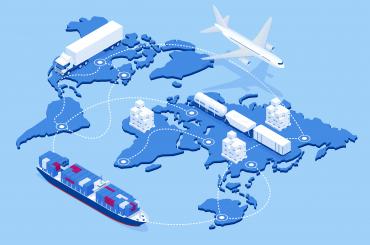
Once fueled by technology transfer, learning, and open markets, the extraordinary growth driven by globalisation is now constrained by rising geopolitical tensions, fragmentation, and declining trust – making future ‘growth miracles’ far less likely.
Published 12.11.25
-
Unlocking the economic potential of female entrepreneurship
Closing the gender gap in entrepreneurship is not just a social equity issue—it is a powerful lever for economic growth. Evidence from India shows that women hire more women, and so efforts to boost female entrepreneurship will increase female labour...
Published 21.11.24
-
Pathways to development in a less integrated world
What is the pathway to development in a world marked by rising economic nationalism and less international integration?
Published 15.05.24
-
Informality and the effects of trade in developing countries
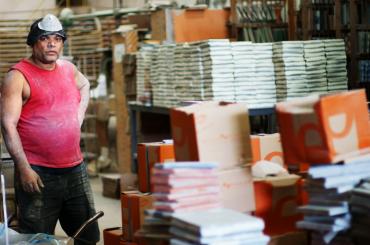
What are the effects of trade amidst a large informal sector? New research studies a model tightly connected to data on firms and workers in Brazil
Published 05.03.21
-
Development in an era of deglobalisation
In an era of deglobalisation, developing countries need more equality within their borders
Published 10.08.20
-
The return to protectionism
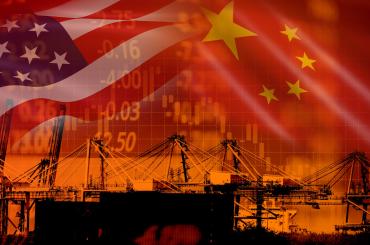
The aggregate annual loss to US consumers from higher import prices as a result of the trade war with China could be as much as $68.8 billion
Published 02.12.19
-
The future of the World Bank: Why knowledge is power
The World Bank is making a shift from a lending function to a knowledge function. This will amplify the role of researchers in its work.
Published 11.09.19
-
The changing face of development: Backlash against globalisation
It is crucial to understand the causes of the rising anti-globalisation sentiment and make changes in developing countries.
Published 25.06.19