

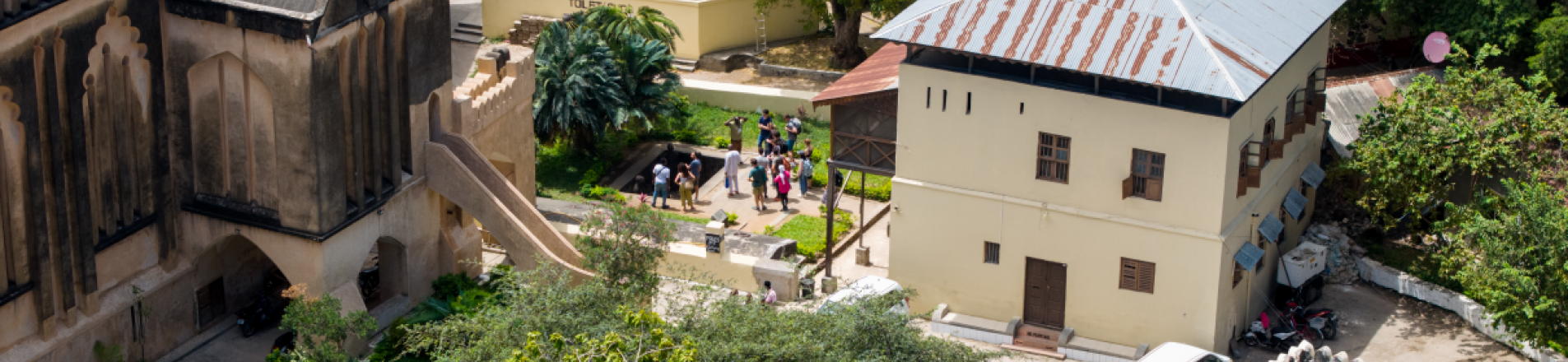


What ACES learned about supporting early-career researchers from hosting a summer school with the African School of Economics.
Pursuing a PhD is intellectually and emotionally demanding. The long, often solitary nature of research can make it difficult to stay motivated or see the broader purpose of one’s work. These challenges are even greater in many developing countries, where limited resources, restricted data access, and weaker links to international networks make it harder for early-career researchers to advance. Yet local scholars bring an essential perspective: their close understanding of cultural and institutional realities helps them identify the questions that matter most for policy. Strengthening their capacity is therefore not only a matter of fairness or inclusion but also essential to producing rigorous, relevant research.
This is what made the 4th ACES Political Economy Summer School, held this past August at the African School of Economics (ASE) in Zanzibar, such a valuable experience. Co-hosted by the Association for Comparative Economic Studies (ACES), ASE, and the Africa Urban Lab (AUL), the event brought together 23 PhD students and early-career researchers for three days of lectures, mentorship, and discussion with leading professors in political economy. Participants represented 12 countries, with 18 students from Africa and Asia. The event, which cost approximately £45,000, was made possible through the support of ACES and the International Growth Centre (IGC) as part of its capacity-building efforts for researchers in developing countries.
Training the next generation of political economists
The programme was designed to maximise both learning and interactions. Each morning featured lectures by senior faculty on cutting-edge topics in political economy. Ceren Baysan spoke about democratic backsliding and how voters form beliefs under censorship. Sara Lowes explored how culture shapes economic behaviour and policy outcomes, showing that norms and perceptions are not peripheral to policymaking but central to its success. Similarly, Awa Ambra Seck’s research on the role of age sets versus kinship ties in East Africa illustrated how policies can fall short when they overlook the cultural context in which they are applied. Noam Yuchtman used real-time data to study social movements and institutional change, while Michael Callen showed how confidence in institutional durability, as reflected in the beliefs of the stakeholders building the state, can increase investments in state capacity, providing observational evidence from Afghanistan, and experimental evidence from Nepal.
These lectures were followed by focused mentorship sessions where students presented their research and received detailed feedback from both faculty and peers. Each student met with two different mentors on both days, ensuring targeted and practical advice. For many, these one-on-one discussions were the most valuable part of the week as an opportunity to test ideas, clarify methods, and receive guidance.
The school concluded with a day-long research conference showcasing some of the most innovative work in the field.
How research really happens
Finished research papers, especially those by accomplished senior scholars, can sometimes feel intimidating. Their standards appear impossibly high, and it is easy for students to doubt that they will ever produce work as original or polished. One of the most valuable aspects of the Summer School was therefore the openness with which senior researchers spoke about the research process itself. Their openness demystified what is often left unsaid in academic settings and made visible the uncertainty, false starts, and revisions that lie behind every published paper.
Three main lessons emerged.
- Personal experience can be a strength: it not only fuels intellectual curiosity but also helps identify what is missing from standard economic debates.
- Curiosity should not stop at the boundaries of economics. Reading widely, across history, politics, and the humanities, can spark new ideas that truly add to the existing economic literature.
- Research projects have long lives, and persistence matters. Young researchers should choose questions they care about deeply, since passion is what sustains a project through years of work and revision.
These discussions collectively underscored a deeper lesson: research is not a linear path, but an iterative process that demands stamina, curiosity about the world, creativity, entrepreneurship, and rigour. It feels difficult because it is, but students should not be expected to face those challenges alone. By providing a rare opportunity for genuine mentorship, the Summer School took a small but significant step away from the ‘survival of the fittest’ model of academia, recognising instead that young researchers thrive when they receive real guidance and support from their community.
Community and mentorship as the foundation of good research
Community was at the heart of the event. In smaller fields such as political economy, opportunities for in-person exchange are rare, especially for students from under-resourced universities. The Summer School created a genuine sense of belonging and collaboration that extended well beyond the formal sessions, with conversations continuing over meals and coffee breaks. The small-group format of the mentorship sessions fostered openness and trust, helping students build lasting relationships with mentors and peers alike.
Equally valuable was the peer-to-peer connection. Participants met others working on similar questions, exchanged practical advice, and discovered opportunities for collaboration that might not have emerged within their own institutions. This horizontal learning between researchers at similar career stages complemented the mentorship from senior academics and strengthened the sense of a shared, supportive research community.
Investing in the next generation of scholars
The ACES Summer School broadened participation in political economy, reaching talented researchers who might not otherwise have access to leading conferences or networks. Senior scholars gave their time generously, offering both inspiration and practical advice. Participants highlighted the mentorship and networking opportunities as the most valuable aspect of the programme, helping them sharpen their research ideas and develop professional links across continents.
For funders such as the IGC, the Summer School represents a high-impact investment in capacity building that aligns closely with the organisation’s broader engagement with local researchers. Delivered in partnership with the ASE at its newly opened Zanzibar campus and the AUL, the programme reflects IGC’s model of working through local institutions to strengthen research ecosystems. With a modest budget, it provided world-class training, fostered collaboration across regions, and reinforced a more inclusive research community.
By investing in a more diverse generation of economists, initiatives like this help shape not only who contributes to economic research but also the questions that are asked and the evidence that is generated. In doing so, they make the discipline stronger, more relevant, and more reflective of the societies it seeks to understand.