

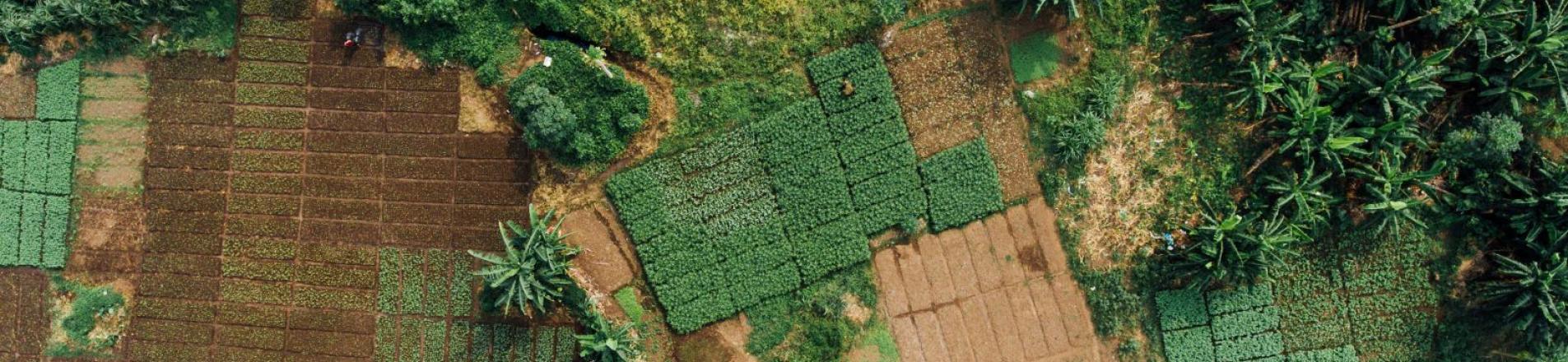

A randomised trial testing digital input loans for smallholder cocoa farmers in Ghana found that access to credit increased farm input spending but failed to raise profits, primarily because inputs arrived too late in the planting season to have the intended effect.
Editor's note: You can listen to this podcast on Spotify, Apple Podcasts, or wherever else you get your podcasts.
In this episode of VoxDevTalks, Monica Lambon-Quayefio discusses research into digital credit for smallholder cocoa farmers in Ghana. Drawing on a randomised controlled trial conducted in partnership with the social enterprise Farmerline, the conversation explores why farmers struggle to access formal credit, how a digitised lending model sought to address this, and what the results reveal about the limits and promise of agricultural fintech.
Why smallholder farmers can't access formal credit
For smallholder farmers in Ghana, formal credit is effectively out of reach. Lambon-Quayefio illustrates the problem with a typical farmer who needs around GHS 500 – roughly US$50 – at the start of the planting season to buy fertiliser, hire labour, and pay for irrigation, yet earns income only at harvest. Banks face three compounding obstacles: farmers have no verifiable income records or credit histories; they lack legally enforceable collateral, since family land cannot be pledged by an individual; and the transaction costs of processing small loans in remote areas make lending commercially unviable.
"A smallholder farmer does not have any legally enforceable collateral, and this is because the farm that she's currently working on probably belongs to a husband or her father's family, some family member or a clan. As an individual farmer, she cannot use the family land to back her loan application."
Without bank finance, farmers rely on informal strategies, such as savings groups, asset liquidation, family loans, or advance sales of their harvest to traders at below-market prices. Each option is limited, and together they trap farmers in a cycle of under-investment.
The consequences of under-investment at farm and national level
When farmers cannot fund adequate inputs, the consequences ripple outward. At the individual level, under-investment leads to lower yields, reduced income, and greater vulnerability to shocks. Households become less food-secure and less resilient. At the national level, stagnating agricultural productivity constrains rural structural transformation, drives up food prices, and – in the case of a cash crop like cocoa – erodes export earnings.
"Under-investments would have serious implications, both at the farmer level and also at the national level."
How Farmerline's digital credit model works
Farmerline, the implementing partner in this study, is a social enterprise operating across several African countries. Its platform, Merged Data, offers digital services including weather information, market prices, and farming tips. On the financing side, the platform uses a credit-scoring algorithm built from non-traditional data – farm characteristics, production records, and sales histories – to assess creditworthiness without requiring conventional collateral.
The application process is fully digital: farmers apply via a web-based app, receive updates by phone, and collect inputs at the farm gate or a nearby pick-up point. Loan sizes were capped at GHS 350 (approximately $75), with a three-month grace period before monthly repayments began – timed to align with the harvest season.
How the experiment was structured
Farmers who passed Farmerline's credit-scoring algorithm were pooled and randomised into treatment and control groups. Over 900 farmers received the input loans they had applied for; more than 400 were informed they would not receive loans but could continue using Farmerline's other services. The design incorporated three features intended to improve on earlier microfinance models: digital delivery to cut transaction costs, in-kind (input) loans rather than cash to reduce fungibility, and repayment schedules aligned with agricultural cash flows.
What the results showed, and why profits didn't rise
Treated farmers increased their input expenditure by around 11%, spending more not only on Farmerline-supplied items such as fertiliser and pesticides, but also on complementary inputs such as irrigation services that Farmerline did not provide. Land allocated to mixed cropping also rose significantly. However, the study found no statistically significant impact on production values, crop sales, or profits.
The research team identified two explanations. First, many farmers did not receive their inputs within the critical planting window – and in agriculture, late delivery cannot be undone.
"Even though the farmer technically received the loan, the expected productivity boost that the input is supposed to provide, it doesn't materialise."
Second, compliance was imperfect: some treatment farmers did not receive loans at all, and a small share of control farmers obtained inputs through other means, diluting the estimated treatment effect.
The evidence on timing
To test whether timeliness was genuinely the binding constraint, the team examined heterogeneity in outcomes by delivery timing. Farmers who received their inputs on time recorded significantly higher crop sales, with some evidence of higher profits – though estimates were imprecise.
"It wasn't only about what they told us during our interactions with them, but our data also verified this."
This finding reframes the policy question: the challenge is not simply whether farmers can access credit, but whether the full supply chain – procurement, aggregation, last-mile distribution – can operate reliably enough to deliver inputs at the right moment.
What digital credit can still offer, and what it needs alongside it
Despite the disappointing headline results, Lambon-Quayefio sees genuine potential in the model. Digital delivery lowers costs for lenders and borrowers alike, alternative credit scoring expands access beyond collateral-based systems, and in-kind loans shift spending towards productive farm investment. The lesson is not that digital credit fails, but that it cannot work in isolation.
"Digital credit is not a silver bullet. Complementarities definitely matter, especially given that farmers face multiple constraints simultaneously."
References
Karlan, D, M Lambon-Quayefio, U Manjeer, and C Udry (2026), "Access to digital credit for smallholder farmers: Experimental evidence from Ghana," Journal of Development Economics, 181: 103745.