

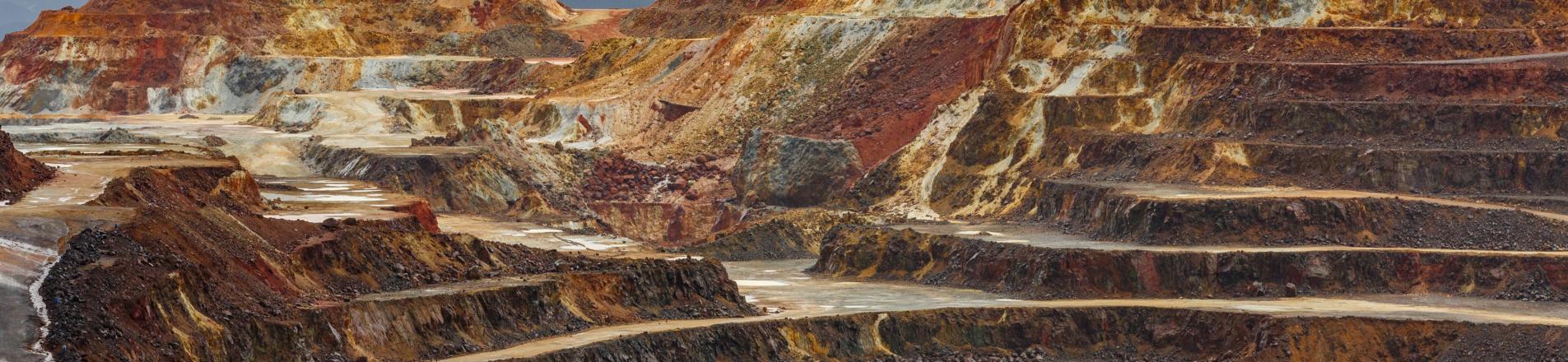

Critical minerals are crucial for the clean energy transition and present a narrow, but open, window for developing countries to translate mineral wealth into economic development.
Shahrukh Wani will host a panel discussion on leveraging critical minerals for economic development in Africa on June 26. Register here to join Colin Buckley, Paul Collier, Kusobile Kamwambi, Marit Kitaw and Zainab Usman.
As the clean energy transition accelerates, demand for the raw materials that make it possible—lithium, cobalt, copper, nickel, and rare earth elements—is soaring. These so-called critical minerals underpin technologies from solar panels to electric vehicles, but their strategic importance is increasingly matched by geopolitical complexity, environmental concerns, and development potential. Here are five things to know about critical minerals today.
They’re not just “rare”—they’re geopolitically charged
Despite the name, most critical minerals aren't geologically scarce. What makes them critical is their economic and strategic value, coupled with supply vulnerability. China’s dominance in refining and processing—90% of rare earths, over 60% of lithium, cobalt, and manganese—illustrates how control over mineral value chains translates to geopolitical leverage.
This asymmetry has catalysed major economies to diversify their mineral supply chains. The US and EU are investing in “friend-shoring,” strategic stockpiling, and recycling technologies to reduce dependence on a single source. Rising geopolitical fragmentation is making diversification not just prudent but essential for long-term stability. But for producing countries, especially in Africa, this also presents a rare chance to reassert agency—if they move fast enough.
Critical minerals supply chains are highly concentrated and risky
Mining and refining are clustered in a handful of countries. The Democratic Republic of Congo (DRC) produces over 70% of the world’s cobalt. Indonesia controls more than 40% of nickel supply and has reshaped trade flows through export bans and incentives for downstream processing. Zambia and Chile dominate copper production, but refining still largely happens abroad.
This concentration creates chokepoints. A political crisis in the DRC or a logistics disruption at the Angolan ports used by Zambia’s copper exporters can send ripples across global value chains. These vulnerabilities are compounded by long lead times (often more than a decade) to bring new projects online, and declining ore grades that raise environmental and energy costs.
Africa holds the key, but risks being left behind
Africa is home to over half the world’s reserves of cobalt, manganese, and platinum, and large shares of copper, chromium, and graphite. But most of these minerals are still exported in raw form. Zambia, for example, refines just 1.3% of its copper domestically; the DRC, only 7%.
This perpetuates a familiar pattern: resource-rich countries exporting low-value inputs and importing high-value goods. With clean energy minerals, the stakes are even higher. Without strategic action, Africa could once again be relegated to the bottom rungs of global value chains, even as its minerals power the world’s green future.
The opportunity exists: recent initiatives like the DRC-Zambia collaboration on battery manufacturing aim to change the script. So does growing recognition that mineral wealth must also drive local energy, housing, and transport development.
Local value addition is crucial, but harder than it sounds
The real economic gains come not from extraction, but from refining, manufacturing, and technology. Yet many African countries struggle with the fundamentals needed for local value addition: reliable power, skilled labour, transport infrastructure, and access to finance.
Zambia, for example, is well-positioned for a “copper-plus” future, with recent discoveries and an abundance of solar energy that could power low-cost refining. But building out smelting capacity, manufacturing supply chains, and industrial clusters demands long-term planning, public investment, and regulatory reform.
An active industrial policy—focused on local supplier development, energy access, infrastructure, and trade facilitation—is vital. Export controls can help, as in Indonesia, but must be paired with investor confidence, regional cooperation, and strong governance. Predictability of policy and regulatory stability are essential to attract the large-scale investments needed for value addition, particularly given the 10–15 year lead times typical in mining.
Time is running out and strategic choices must be made now
Mineral demand is projected to surge for the next 20–30 years, then plateau. The IEA estimates that to meet global climate targets, demand for lithium may rise 40-fold by 2040; cobalt and nickel, 20–25 times. After that, recycling and efficiency improvements might dominate the market.
That makes the coming two decades pivotal. If producing countries don’t act quickly by updating mining codes, building institutions, and investing in human capital, they risk missing the boat. The window for translating mineral wealth into sustainable, diversified economies is narrow but open.
Strategic action can change the trajectory. Countries like Zambia and the DRC can integrate vertically, not just dig and ship. They can lead the green industrialisation of Africa. But doing nothing—relying on volatile commodity exports without reform—is no longer a viable option.
As the IGC’s recent policy note argues: this is not charity, it’s smart strategy. A fairer energy transition is possible—but it must be built now, and it must be built with minerals.