

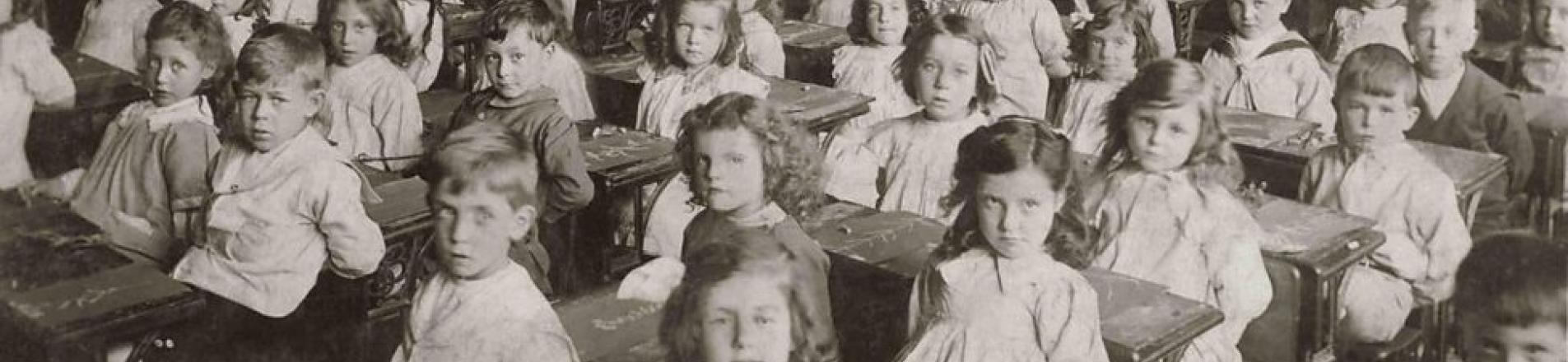

The 1870 Education Act demonstrates how targeted public investment in education can help narrow the gap in opportunity between rich and poor children.
How does access to public education affect social mobility? Public investment in education is often seen as key to levelling the playing field between rich and poor. And there are good reasons to believe it could do precisely this. Few causal relationships have been more thoroughly established in the social sciences than the positive link between education and income at the individual level (Psacharopoulos and Patrinos 2018). It has also been shown that highly mobile areas tend to have better schools (Chetty et al. 2014, Chetty and Hendren 2018).
Yet, surprisingly, the few studies that have examined the long-term effects of investment in public education have typically found that such investment results in poorer children falling even further behind their more affluent peers (Grawe 2010, Parman 2011, Rauscher 2016, Ahsan et al. 2024). The reason often given for this counterintuitive result is that more affluent children (and their parents) are in many cases better positioned to take advantage of improvements in public education than lower-class ones. While a discouraging result for egalitarians, this explanation also suggests the possibility that improvements that are properly targeted at the disadvantaged may yield better results.
The 1870 Education Act in England and Wales provides an opportunity to test exactly this. The Act, one of the most dramatic education policy experiments in English history, created the country’s first publicly administered system of primary schools. Crucially, it specifically targeted working-class children, leaving the private schools typically used by middle- and upper-class children untouched.
My research (Milner 2025) examines how the Act shaped education, occupation, and intergenerational mobility. I find that the reform resulted in significant improvements in adult occupation quality among treated children, and greatly narrowed the opportunity gap between rich and poor.
The 1870 Education Act
Before 1870, nearly all English schools were privately run, mostly by the Church of England or religious charities. The 1870 Act changed this by allowing local governments to create ‘school boards’, elected bodies empowered to build and operate schools funded through local taxes and central grants. Within a decade, over 2,000 boards had been created and thousands of ‘board schools’ opened, more than doubling total school supply. By the end of the century, nearly 1.9 million children attended these schools each year.
Unlike privately run schools, board schools were publicly accountable, enabled to enforce attendance, and tax financed. This last characteristic resulted in board schools being better resourced and cheaper relative to private schools aimed at the working classes: in 1880, they spent roughly 20% more per pupil, charged lower fees, and often waived them for the poorest households. Yet the ability of boards to source funding through local land taxes also negatively affected their take-up, for while boards could be formed voluntarily, local elites often resisted them so as to avoid tax increases. Importantly, though, the Act set a minimum threshold of total primary school supply – one school space per every six residents. Parishes with school supply below the threshold were given a grace period during which they could expand private school supply to meet the requirement, but if they failed to do so they were compelled to form school boards.
School board formation, and its impact on attendance and adult occupation
The result of this policy, interacted with elite opposition to boards, can be seen in Figure 1. The larger the initial supply shortfall, the more costly it was to fill privately within the grace period, making board formation more likely. Above the cutoff, initial school supply had little bearing on whether or not a parish received a school board, with sufficiently supplied parishes rarely forming boards regardless. The result is a kink in the relationship between board formation and initial school supply at the cutoff.
Figure 1: Parishes receiving boards
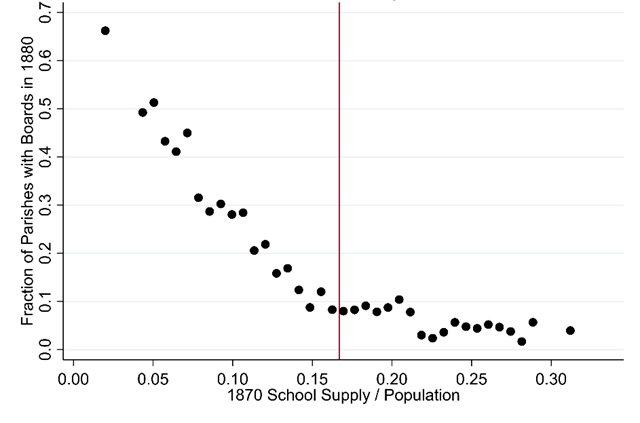
Notes: The red line denotes the 1/6 cutoff. Parishes are binned by 1870 school supply to population ratio.
This kink enables identification of the effects of board formation. Essentially, if kinks in post-treatment outcomes also exist at the cutoff (and no kinks exist at the cutoff among any other pre-treatment characteristics), one can safely assume they were caused by the initial kink in board formation. Such kinks can be seen both in post-1870 school attendance (Figure 2) and, most importantly, adult occupation outcomes among the treated. The 1901 census data shows the proportion of males aged 19-30 within the parish employed in occupations that made use of literacy (which made heavy use of human capital and tended to be higher-status and higher-paying) against pre-reform parish school supply (Figure 3). The large kink at the cutoff suggests that exposure to board schools as a child increased the likelihood of holding a literate occupation in adulthood by around 17 percentage points, a strikingly large impact given that only around 45% of the working population held such jobs in 1901!
Figure 2: Proportion of boys in school, 1881 (11–12)
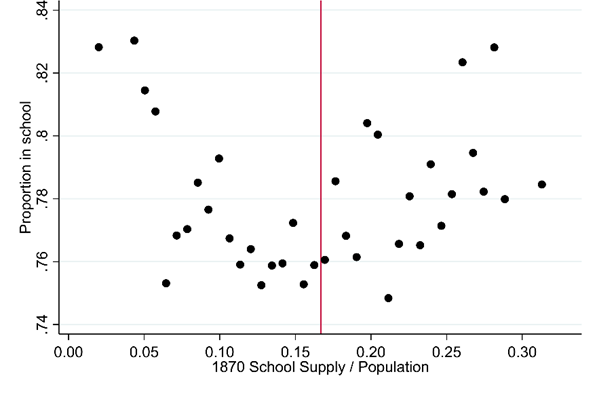
Figure 3: Proportion of occupations requiring literacy, 1901 (19–30)

Targeting the poor greatly improved intergenerational mobility
Yet the question still remains: did these gains translate into broader social mobility? To test this, millions of father-son pairs were linked across the 1881 and 1901 censuses, allowing occupation comparison across generations. In order to address any systematic differences across households, the impact of the reform is identified using brothers raised within the same home, comparing those young enough to be treated with siblings too old to be.
The results imply that exposure to board schools did indeed greatly decrease the gap in adult outcomes between high- and low-class children. Treated children born into lower-class homes – those targeted by board schools – ended up obtaining significantly better occupations than their older, untreated siblings; in contrast, children of the correct age to have attended board schools, but from higher-class families (and thus presumably sent to select private schools), if anything fared slightly worse than their older siblings, presumably due to increased competition for good jobs from their lower-class peers whose education had now improved. As a result, the gap in literate occupation attainment between lower- and higher-class children fell by approximately 18% in treated areas. Using a rough measure of income based on occupation, it is estimated that exposure to board schools decreased the intergenerational elasticity of income – a commonly used measure of social mobility showing how strongly related a child’s adult income is to their parent’s – by as much as 40%!
Policy implications for public education
Policymakers attempting to improve social mobility should be careful when investing in education. Previous research has demonstrated that untargeted investment tends to get captured by those who are already well-off, worsening social mobility as a result. However, the experience of 1870 Education Act demonstrates that careful targeting can reverse this effect. By effectively funnelling public investment in education towards those who need it most, policymakers can indeed nudge society closer towards the goal of equality of opportunity.
References
Ahsan, M N, M S Emran, and F Shilpi (2024), “Complementarities and intergenerational educational mobility: Theory and evidence from Indonesia,” Journal of Economic Behavior & Organization, 225: 170–191.
Chetty, R, and N Hendren (2018), “The effects of neighborhoods on intergenerational mobility II: County-level estimates,” Quarterly Journal of Economics, 133: 1163–1228.
Chetty, R, N Hendren, P Kline, and E Saez (2014), “Where is the land of opportunity? The geography of intergenerational mobility in the United States,” Quarterly Journal of Economics, 129: 1553–1623.
Grawe, N D (2010), “Primary and secondary school quality and intergenerational earnings mobility,” Journal of Human Capital, 4: 331–364.
Milner, B (2025), “The impact of state-provided education: Evidence from the 1870 Education Act,” Economic Journal, 135: 2302–2337.
Parman, J (2011), “American mobility and the expansion of public education,” Journal of Economic History, 71: 105–132.
Psacharopoulos, G, and H A Patrinos (2018), “Returns to investment in education: A decennial review of the global literature,” Education Economics, 26: 445–458.
Rauscher, E (2016), “Does educational equality increase mobility? Exploiting nineteenth century US compulsory schooling laws,” American Journal of Sociology, 121: 1697–1761.