



View Chapter:
Downloads:
Chapter 1
Summary
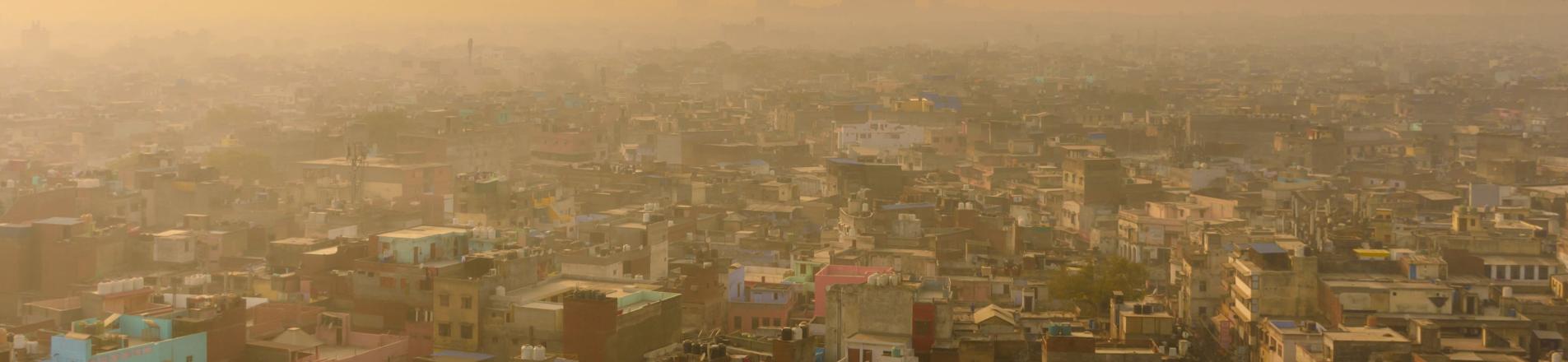
Air pollution is the world’s leading environmental health risk, and its burden falls overwhelmingly on low- and middle-income countries where populations are most exposed and least able to protect themselves. Economics has contributed substantially to understanding the scale of these damages and the limits of private responses. Its core message for policy is sobering: the problem is not primarily a lack of regulation, but a deficit of enforcement, state capacity, and the sustained collective action needed to make private protection work. Below we summarise what the evidence tells us and where the most important gaps remain.
What we have learned
Damages are large and are almost certainly understated. Credible causal estimates consistently find large effects of air pollution on mortality, cognitive performance, and productivity. The costs to LMICs are especially high, partly because populations face chronic exposures far outside the range studied in rich-country settings, and partly because limited healthcare access and lower adaptive capacity amplify harm. Studies measuring only mortality understate total welfare costs by ignoring the private defensive investments households make to protect themselves.
People respond to information, but private protection is unequal and often insufficient. Disclosure of real-time air quality data changes behaviour. China’s national monitoring rollout generated a 9% reduction in pollution-related mortality, making it one of the highest-return environmental investments documented in the economics literature. Yet alerts alone have limited impact without enforcement, and the ability to protect oneself through purifiers, masks, or migration is strongly correlated with income. Private defensive behaviour cannot substitute for public regulation.
Low demand for clean air among low-income households is not primarily explained by standard market failures. Experimental evidence from Dhaka finds that correcting misbeliefs, removing credit constraints, and providing direct experience with purifiers all fail to raise willingness to pay meaningfully. This is not a problem solvable by better information or subsidised access alone. It points towards genuinely low private valuations in contexts of extreme pollution, and raises difficult questions for policies that rely on household action.
Institutional investments in indoor air quality offer unusually high returns, but sustained operation is the binding constraint. Air filters in schools deliver test score gains comparable to reducing class sizes by a third, at less than 1% of the cost. Purifiers in garment factories pay back in under three months. Yet evidence from Pakistan shows that gains can evaporate entirely when devices are switched off, and adoption outside experimental settings remains close to zero. The bottleneck is not technology or cost but the sustained behavioural change required to realise gains.
Emissions markets can work in developing countries. Experimental evidence from India demonstrates both compliance and a sustained 20% reduction in industrial pollution. Command-and-control regulation fails because enforcement is costly and discretionary. Market-based instruments lower transaction costs, reduce scope for corruption, and create a broader set of stakeholders with an interest in accurate monitoring.
Important knowledge gaps
The concentration–response relationship at the pollution levels typical of South Asia and sub-Saharan Africa is poorly identified, and burden estimates derived from studies conducted at much lower exposures carry large uncertainty. Credible causal evidence from most of Africa and Latin America is almost entirely absent. Alert system design for cities where pollution is persistently dangerous has not been studied. The political economy of airshed coordination, especially across national borders, is largely unexplored. And we still do not know what governance structures and incentives ensure that high-return defensive investments, from school purifiers to factory filtration, are sustained outside experimental conditions. These gaps are not merely academic. They are the central obstacles between where the evidence now stands and the policy changes that could save millions of lives.
Contact VoxDev
If you have questions, feedback, or would like more information about this article, please feel free to reach out to the VoxDev team. We’re here to help with any inquiries and to provide further insights on our research and content.