




View Chapter:
Downloads:
Chapter 5
The Role of Regulatory Innovation
Many of the sources of air pollution in lower-income countries (large-scale residential biomass being an exception) are also found in richer and cleaner parts of the world. Indeed, the manufacturing and transportation sectors are often larger in developed countries. Thus, we might wonder if high levels of pollution simply reflect the preferences of policymakers.
Policy choices may play a role but this does not appear to be the whole story. The disappointing environmental outcomes seen in many parts of the world do not necessarily reflect the absence of regulation or legislation to control pollution. The map in Figure 7 shows the number of environmental policy instruments targeted at air pollution for countries across the world. If air quality outcomes in many developing countries are poor, then from a regulatory point of view it is not entirely for want of trying.
Figure 7: National and sub-national policy instruments targeting air pollution
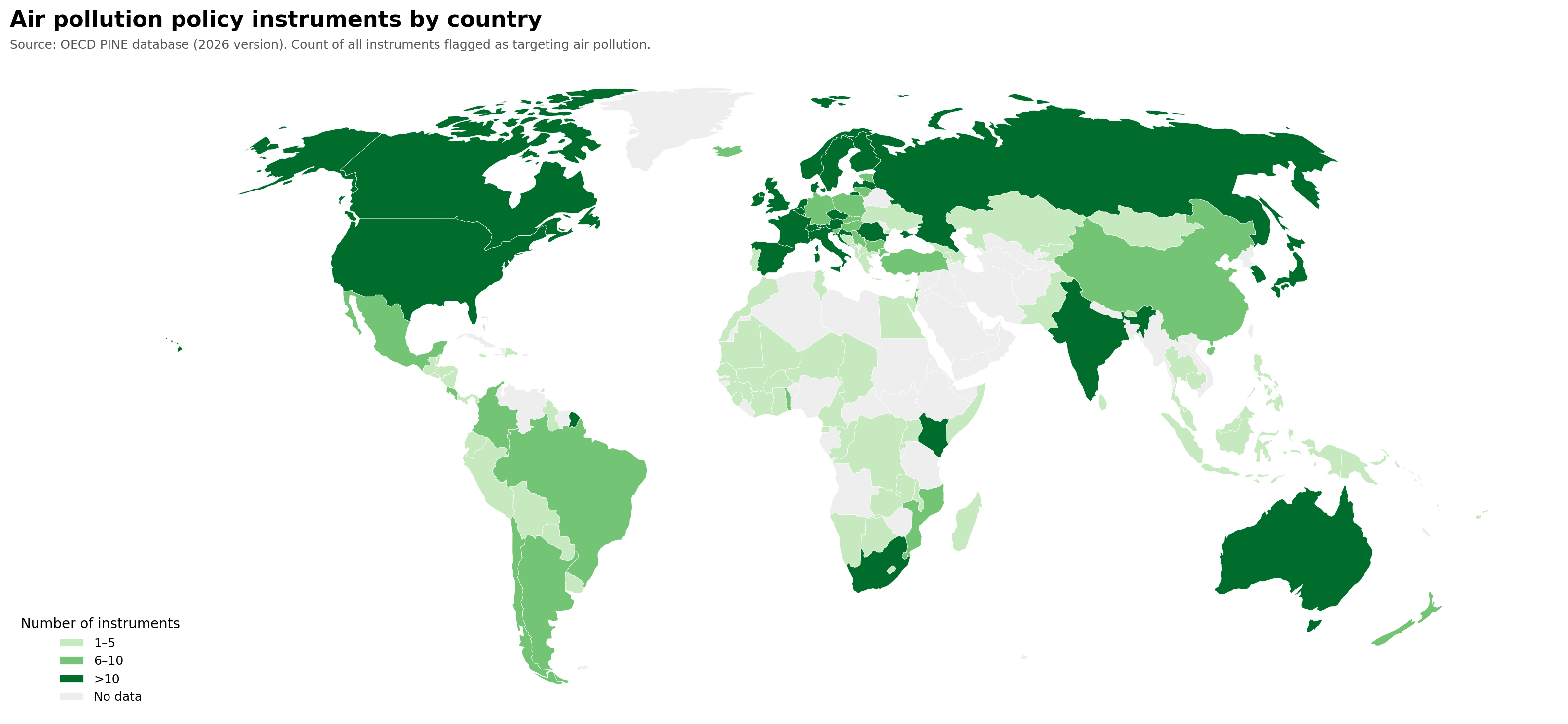
Source: OECD PINE Database (2026)
The observation that there are highly polluted countries like India that are both poor and have stringent environmental regulation on the books, suggests looking at the pollution problem a little differently. The challenge before us is to figure out why existing regulations do not work well in many countries, and how to redesign them to be better adapted to the local context. For this reason, we approach air pollution as a problem that is fundamentally about state-capacity and how institutions and markets function in developing countries.
Figure 8 shows an index of “Government Effectiveness” for countries across the world from Kaufmann and Kraay (2023). Countries in heavily polluted regions such as South Asia, South-East Asia, and parts of North Africa all have markedly lower scores on this index than the relatively less polluted nations of Europe and North America. Conversely China, which has made significant reductions in air pollution over the last decade, does relatively well.
Figure 8: Index of government effectiveness
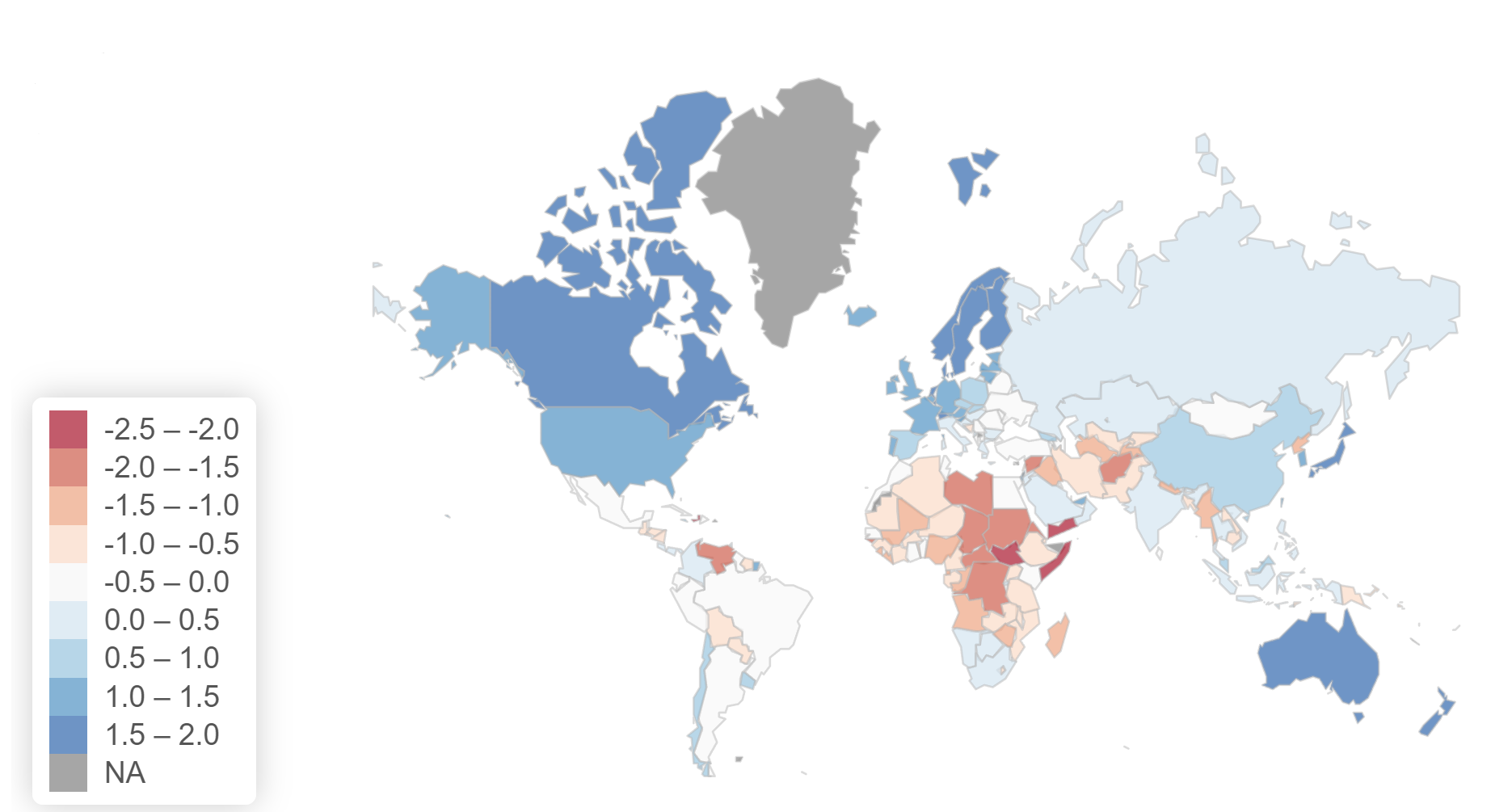
Source: Kaufmann and Kraay (2023)
State Capacity and Environmental Quality
The relationship between environmental outcomes and existing regulation could plausibly be mediated by a range of factors including corruption, human capital in regulatory agencies, state credibility, bureaucratic incentives, monitoring and implementation constraints, and organisational culture and intrinsic motivation.
On corruption, for instance, Duflo et al. (2013) document how environmental regulators may struggle to obtain reliable data on polluter behaviour because of conflicts of interest between the goals of the state, and those of certified third-party auditors who are selected and paid by polluting firms. Stoerk (2016) finds evidence suggesting falsification of air quality data in China until 2012, but not afterwards. Since this data comes from government departments, these results likely reflect misaligned bureaucratic incentives, especially in the way local officials were rewarded for so-called “Blue Sky Days”. Oliva (2015) documents evidence of corruption in vehicle emissions testing in Mexico City. Corruption in monitoring is particularly concerning because it risks reducing the faith of both government staff and the public in the data underpinning the entire regulatory apparatus.
Environmental regulators may also find it difficult to hire and pay the significant number of trained staff needed to monitor polluters in the status-quo. These staffing requirements are made even more severe when there are a large number of polluters – from a regulatory point of view it may be much easier to manage a single large manufacturing plant than several small units, even if their total fuel consumption (a measure of polluting potential) is very similar. For example, Ghosh et al. (2023) identify severe shortfalls in sanctioned staff in pollution control boards in India, made worse by unfilled vacancies and a minority of technical staff among those positions that are filled.
There are also large differences in the budget allocations to environmental regulators in rich versus poor countries. These differences cannot be rationalised purely by appealing to differences in per capita income. In 2022, the US had a purchasing power parity adjusted gross national income per capita about 9.5 times that of India. However, India is about 12.6 times as dense, suggesting that even adjusting for income, India should be willing to pay more, not less, for marginal reductions in pollution. Satellite estimates of annual average fine particulate air pollution in India in 2021 were estimated at about 58.7 µg/m3, about 7.5 times higher than the US at 7.84 µg/m3. To the extent that effective regulation might deliver non-marginal gains, the returns in India would be very large. Notwithstanding these facts, the nationwide budget for India’s flagship National Clean Air Programme was just $90 million in 2022. If low-income countries have regulation on the books, but spend much less on enforcing them, it may not be surprising that their outcomes look different.
Emission Markets vs Command-and-Control
Command-and-control regulation of industrial point sources is broadly characterised by laying down fixed standards or technical requirements on factories. Often, violating these norms is associated with severe penalties, including criminal cases. Enforcing such regulation requires not just a significant number of trained personnel to determine compliance but also introduces high transaction costs, especially where non-compliance is high and regulators must take the polluter to court (Ghosh 2015).
This approach to regulation also imposes high costs on polluters. The binary nature of compliance conditions in command-and-control regimes means that the size of penalties can be out of proportion to the amount of over-pollution. Minor violations of concentration standards are less bad than pollution that is well above the norm, but the law might prescribe similar penalties and enforcement tools. Similarly, standards may not vary with scale or operating hours. At any given emissions concentration, a small-scale textile plant operating 40 hours a week will do less damage than a larger plant running 24 hours a day. Yet both may be mandated to install similar abatement equipment.
Of course, rules may be re-written to address some of these weaknesses. Nevertheless, a fundamental feature of command-and-control regimes is that the regulator must decide what action is appropriate for each firm. Given the very limited information available to them, it is almost certain that the resulting regulation will be economically inefficient.
In settings where the transaction costs involved in penalising violations are high, the regulator is less likely to take strict action against firms that pollute too much. These costs may include the cost of monitoring and staff, as well as legal and administrative costs when enforcement actions are taken. Conversely for firms, the cost of cutting pollution to meet standards and the likelihood of being penalised influences their willingness to over-pollute. Command-and-control regimes which impose high costs on both firms and regulators are thus more likely to see widespread non-compliance and the exercise of unwritten regulatory discretion (Duflo et al. 2018).
Emission markets present an alternative that might address some of these problems. They are not a new instrument in developed countries, dating back to the well-known SO2 trading regimes that formed part of the 1990 Clean Air Act amendments in the US, replacing a command-and-control regime that also failed to induce compliance with norms (Burtraw and Szambelan 2011). Nevertheless, they have remained practically non-existent in lower-income countries.
Prima facie, this appears to be a missed opportunity because markets address many of the concerns discussed here. The standard justification for markets is that they can reduce costs, both because they provide gains from trade in permits and because they credit plants for both intensive margin abatement (how much they emit while operating) and extensive margin adjustments (how long they operate).
The penalty for non-compliance in a market is financial and proportional to the degree of permit shortfall so that large violators are charged more. Fines can be automatically calculated and imposed, thus reducing the transaction costs of enforcement. Markets require transparency with little room for regulatory discretion. They also broaden the set of stakeholders interested in accurate data and compliance beyond the regulator and public. In an emissions market, any single firm’s decision to falsify data or violate permit holding requirements also affects other firms, who might then find their permit holdings worth less. Implementing markets requires careful design and trained oversight and involves skills that go beyond technical assessments of abatement equipment or lab measurements of pollutant concentrations. That said, regulators may need fewer staff in total to administer a market. Emissions monitoring in a market uses technology such as continuous emissions monitoring systems, reducing the staff required to carry out manual checks, but requiring clear equipment and calibration standards. Evidence from China suggests that automated monitoring can reduce the falsification of data (Greenstone et al. 2022).
Taken together, markets change enforcement costs, compliance costs, and the state capacity necessary to implement them. There is evidence to suggest that these changes may lead to better compliance and greater effectiveness. In recent work, Greenstone et al. (2025b) show that emissions markets can be implemented in a developing country context and also provide the first experimental evidence demonstrating both compliance and a 20% reduction in pollution sustained over multiple years. Although we are not aware of other experimental evaluations of the causal effects of market-based regimes, it is worth noting that China, which reduced SO2 emissions from over 38 million tonnes per year to 12 million between 2006 and 2019,[1] has regulated SO2 using a permit trading regime. Outside of developing country settings, quasi-experimental evaluations such as Fowlie et al. (2012) suggest the US RECLAIM markets targeting NOx cut emissions by a fifth. Another example of markets comes from South Korea, which introduced a three-phase market covering several pollutants over 800 large point-source emitters.[2] Launched in 2015, the market was expanded in three steps in 2018 and then again in 2021.
Transparency and Information Disclosure
Information disclosure initiatives are sometimes referred to as the “third wave” in environmental regulation, contrasting with command-and-control and market-based approaches. Disclosure schemes have grown popular across the world with examples including Indonesia’s PROPER initiative, Ghana’s AKOBEN scheme, the US Toxic Release Inventory, China’s Blue Map initiative and the Philippines’ Eco-Watch.
Arguably, making information on polluters public is a useful end in itself. It may also enhance the effectiveness of other policies in place. But there are also several mechanisms through which public disclosure initiatives might directly change polluter behaviour. One channel is via peer pressure applied by the public, who are claimants on clean air rights and may act as Coasian agents once informed about plant behaviour. Peer comparisons may also provide new information about the set of economically feasible pollution outcomes and may spur peer competitive behaviour among industry managers. Additionally, disclosure could create pressure on the industry from shareholders, customers, and employees, in addition to the affected citizens and the regulator.
A non-experimental study on Indonesia’s Information Disclosure programme (PROPER) suggested that these ratings may have helped to increase pressure from shareholders and that bad ratings reduced the market value of companies (Blackman et al. 2004). Environmental information-disclosure programmes have been recognised as cost-effective tools because they require minimal additional staff and leverage information that is already held by regulators. Therefore, information disclosure schemes may be particularly useful in command-and-control regimes which are limited by budgetary and staff constraints.
There is a fair amount of suggestive evidence on the benefits of disclosure and transparency (Blackman 2010) but rigorous causal or experimental evidence is more limited. In very recent work, Buntaine et al. (2024) use a large field experiment to show that using social media to make public appeals to environmental regulators about firms violating pollution norms reduces both emissions and violations. Private appeals, in contrast, have modest effects. They also find broader changes in regulator priorities in the wake of public appeals. Shi et al. (2021) study the introduction of the Pollutant Information Transparency Index (PITI) in China and use quasi-experimental methods to link this to reductions in firm emissions. García et al. (2007) study Indonesia’s PROPER scheme, albeit in the context of water pollutants, and find evidence that firms respond to disclosure by reducing emissions. Similar channels may apply to air pollutants as well. In India, Powers et al. (2011) study a Green Ratings regime in the paper and pulp industry and find evidence that dirty firms responded by reducing pollution loading.
Lastly, just as public disclosure of environmental violations may change firm behaviour, the disclosure of ambient air quality violations may also change regulatory or state behaviour. Jha and Nauze (2022) find that the installation of air quality monitors on US embassy sites led to reductions in pollution in the cities where they were installed. Since these investments were largely made in cities with little public data on air quality, it is plausible that US embassy monitoring helped by making the failure of the government to control pollution widely known within and outside the city in question.
Driving Restrictions and Congestion Pricing
Transportation emissions are a rapidly growing cause of air pollution in many developing countries, especially in dense urban agglomerations. The environmental challenge here is made especially severe when old vehicles remain on the road for many years, as is the case in many low-income countries. However, since the share of new manufactured vehicles that are low or zero emissions is growing rapidly, at first glance we might assume that the growing vehicle stock in developing countries will be cleaner than in developed countries today.
This hope is sadly belied by the fact that there is a large and growing market in second-hand cars. Older vehicles are frequently exported from Europe and the US to developing countries all over the world. UNEP (2020) reports that between 2015 and 2018 the EU, Japan, and the US exported over 14 million used vehicles with 70% going to low-income countries.[3] Figure 9 shows which countries allow imports of second-hand vehicles and whether they impose any restrictions on vehicle age. A key concern here is that many low-income countries impose no restrictions whatsoever on vehicle age, creating a serious problem of vehicle stock growth that is not only more polluting than new vehicles currently being sold, but also dirtier than vehicles operating today in developed countries.
Figure 9: Used Light Duty Vehicle Import Age Limits (July 2020)
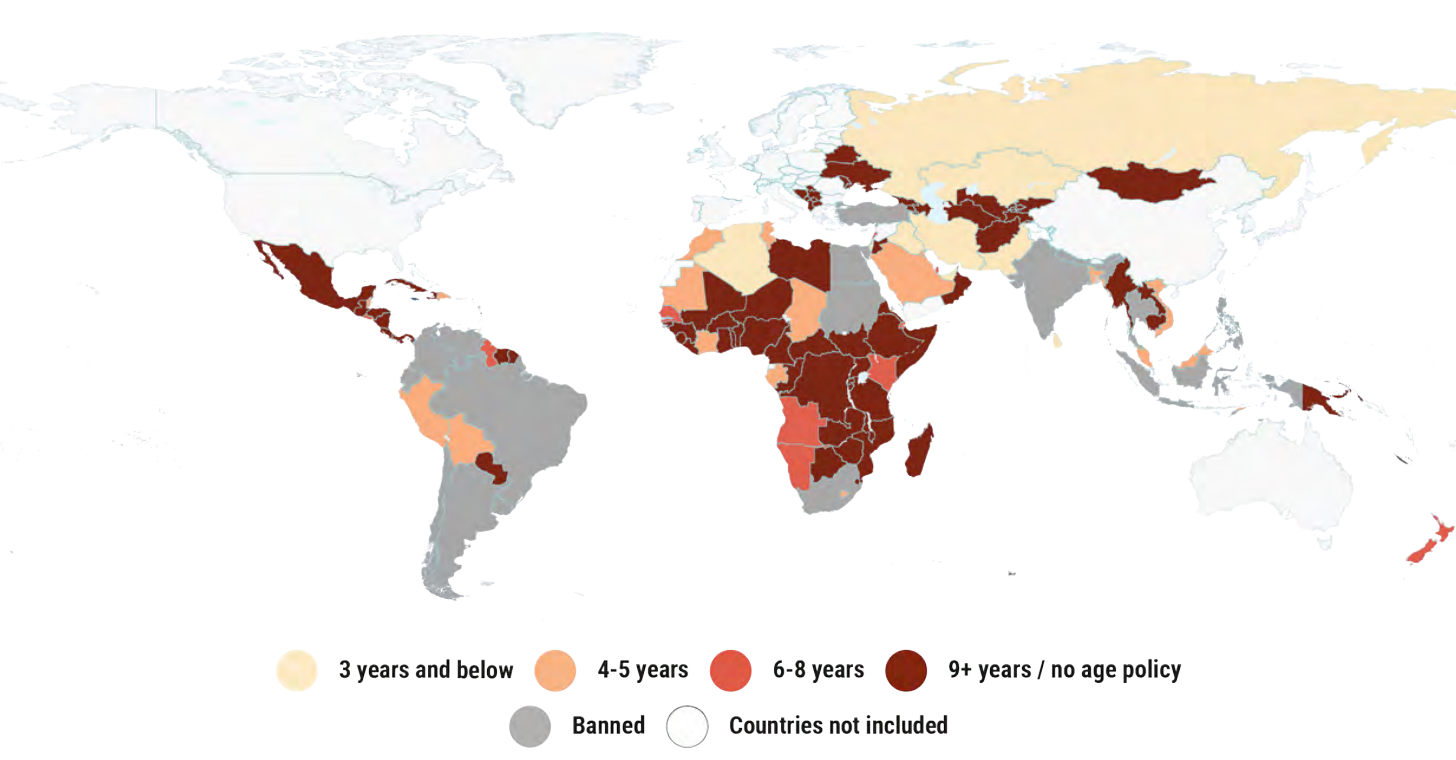
Source: UNEP (2020)
Transport emissions therefore pose a two-pronged challenge. First, how do governments make the technology providing private transport cleaner? This might include shifting to electric vehicles, higher emission standards, newer cars, motorcycles, and so on. Second, conditional on the age and technology of the vehicle stock, how do governments change how they are used on the intensive margin? The desired responses include driving less and shifting modes of transport away from private vehicles and towards public transit.
Expanding Public Transport Infrastructure
The discourse around transport emissions in developing countries tends to gravitate quite quickly towards the need to build more public transport. Unfortunately, there is little evidence that air pollution – especially fine particulate pollution – is responsive to expansions in public transit systems. Cropper and Suri (2024) review a range of studies attempting to identify a causal link between pollution and transit expansions. They find consistent evidence of modest but significant reductions in CO2 but zero or insignificant impacts on fine particulates, by far the most important ambient pollutant today.[4] Li et al. (2020) also review the literature and conclude: “Although improving transportation infrastructure is necessary to address traffic congestion and promote economic activities, it is unlikely to be a cost-effective way to improve environmental quality.”
Bull et al. (2021) provide experimental evidence that suggests that one explanation for these muted effects may be that lowering the cost of public transport generates new trips on the transit system, without displacing existing vehicle-miles travelled using more polluting modes. This additional mobility may be welfare enhancing and economically useful, but these are motivations for public transport that are independent of cleaning up the air.
Changing Driving Behaviours
An alternative direction for policy is to consider ways of making it harder to use private vehicles, given the unpriced externalities of pollution and congestion. Several countries have experimented with command-and-control approaches to doing this, largely through driving restrictions and bans. Examples include Santiago and Athens in the 1980s and day-of-week driving restriction schemes in Mexico City (1989), Beijing (2008), and New Delhi (2016). The evidence on how well these work is mixed but appears to suggest that if driving can be reduced without cheating, then pollution levels do decrease. Greenstone et al. (2018) examine Delhi’s Odd-Even driving scheme and find large reductions when the scheme was implemented in January 2016 with difference-in-differences estimates suggesting that fine particulate concentrations dropped by about 13% in the days and hours that the scheme was in force. Viard and Fu (2015) similarly conclude that restrictions in Beijing reduced air pollution by 19%.
Both these studies look at relatively short-run outcomes. Davis (2008) points out that Mexico’s driving restriction scheme may have actually made air quality worse in the long run, because in an effort to get around license-plate based restrictions, households bought additional older and more polluting cars with the “right number”. A broader concern with such approaches is that they give rise to many of the same problems we discussed in the context of industrial emissions. Driving restrictions need enforcers on the street, may need heavy penalties to work, and may encourage corruption because they impose large costs on drivers without being able to eliminate discretion in enforcement by traffic policy. Blanket bans on using cars on some days are also economically inefficient since it is blind to the heterogeneity in welfare costs or social value of individual trips.
If we combine the evidence that reducing driving can work to reduce pollution with our critique of command-and-control approaches, it seems natural to consider whether market-based instruments with the same goals might work better.
Congestion pricing schemes have become popular in many developed countries. London launched a long-running congestion pricing regime in 2003 that the European Environment Agency credited with reducing PM10 pollution by 22% and congestion by 26% (European Environment Agency 2008). Beevers and Carslaw (2005) evaluate the early outcomes from the same scheme using a road traffic emissions model and argue that it reduced PM10 levels by about 12%. Singapore introduced electronic road pricing in 1998 with charges varying by vehicle size. Olszewski and Xie (2005) use a discrete choice model to argue this scheme significantly reduced congestion (which presumably should also reduce pollution) although again this evidence falls a little short of rigorous causal inference.
Stronger evidence comes from Milan where Gibson and Carnovale (2015) use a natural experiment to study the effect of their congestion pricing regime (launched in 2008 and expanded in 2012). They find that when the scheme was temporarily suspended, PM10 levels rose by about 16% and PM2.5 levels by about 21%. These are strikingly large effects. Similarly, Simeonova et al. (2021) study a congestion pricing regime introduced in Stockholm in 2006 and find the tax reduced both ambient air pollution by 5–15% and acute asthma attacks among children. Notwithstanding this body of evidence – which may explain part of Europe’s success in cutting pollution over the last decade (see Figure 3) – there is little use of congestion pricing in developing countries.
Changing Vehicle Technology Stock
Intensive margin changes in driving behaviours could be augmented by policy instruments designed to change the costs of those behaviours through shifting the technology stock towards lower-emission vehicles. These steps are not sufficient to reduce pollution in the short term, for the simple reason that it is difficult to change vehicle stock quickly. Nevertheless, when we consider high present levels of pollution in low-income countries and then introduce the fact of growing vehicle ownership, it seems likely that there would be large benefits from making future purchases less polluting.
Encouraging people to purchase electric vehicles or low-emission vehicles has commonly involved (i) programmes that reduce the upfront cost of purchase through tax credits, rebates, or trade-in schemes; or (ii) schemes that reduce monetary and non-monetary operating costs, for instance through government investments in charging networks. As an example of the first type, Shanghai provided free licence plates (worth about $13,500) until 2023, as well as upfront rebates worth $1,500 to replace an internal combustion vehicle (Zhang et al. 2024). Similarly, many countries have made some investment in public charging but the level of support varies dramatically. Figure 10 shows the growth in public charging infrastructure over time in China, the US, and Europe.
Figure 10: Growth in public charging infrastructure in Europe, China, and the US
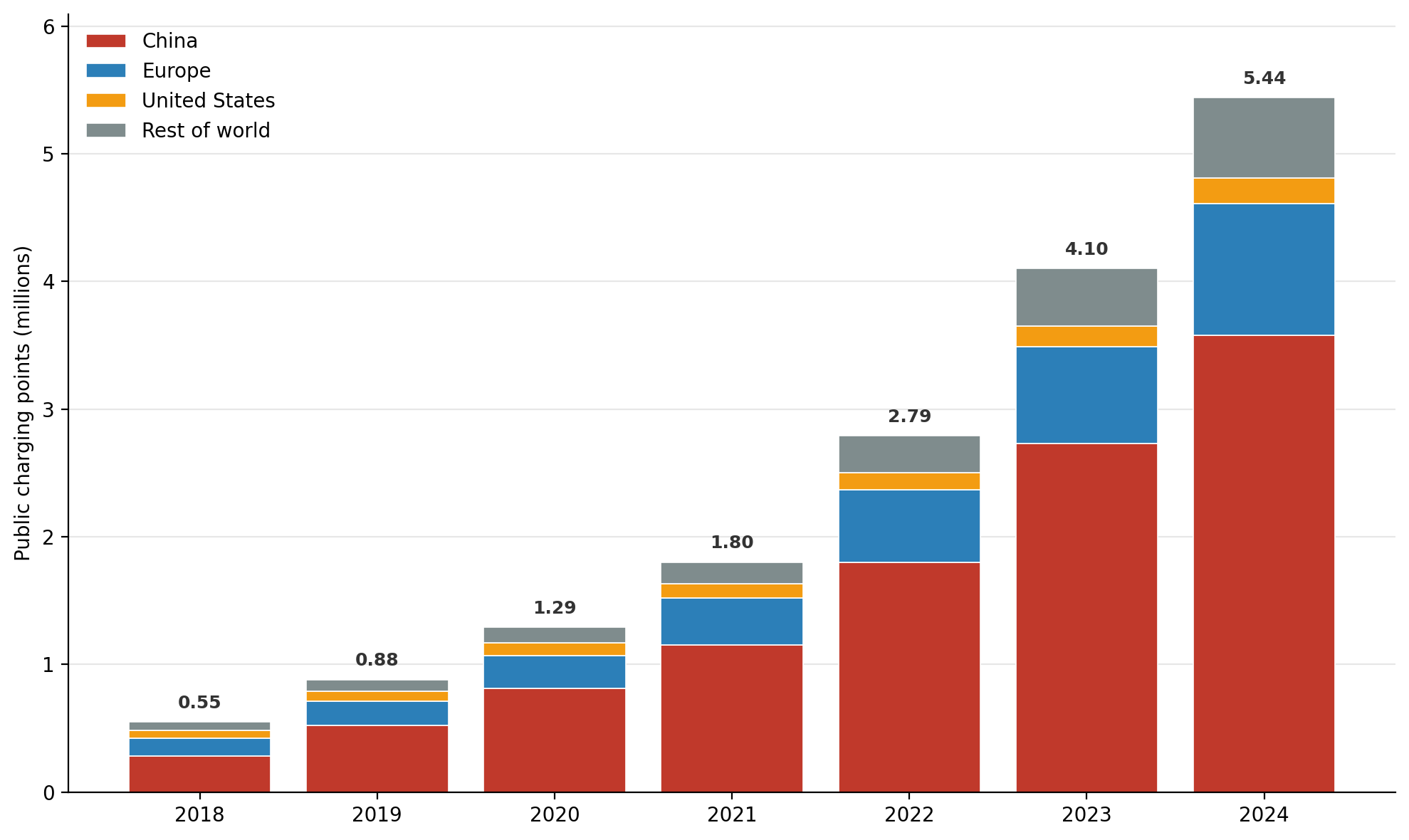
Source: International Energy Agency Global EV Outlook (2025)
Subsidies to capital costs give rise to three concerns so far as their cost-effectiveness is concerned (see Li et al. (2020) for a more detailed discussion). These arise from additionality, heterogeneity in benefits, and heterogeneity in behaviour.
Additionality: To what extent do policies such as tax credits or capital subsidies or trade-in schemes lead to additional purchases relative to the counterfactual, versus making transfers to people who would have made the same choices anyway? Huse and Lucinda (2014) find that because flexible fuel vehicles cost less to operate, a rebate scheme in Sweden devoted a significant share of expenditures to transfers for non-additional purchases. Xing et al. (2021) make a similar point in the context of a US tax credit scheme, arguing that 70% of credits went to consumers who would have bought plug-in hybrid vehicles even without these incentives.
Heterogeneity in pollution benefits: How should governments account for the fact that because shifting to electric vehicles displaces emissions towards point sources, the net pollution benefits will vary depending on the fuel used to produce the additional electricity required? For instance, Holland et al. (2016) show that electric vehicles have varying pollution benefits relative to gasoline cars in different parts of the US, including being worse in sparsely populated states with power generated mostly from coal.
Heterogeneity in driving behaviours: Are electric vehicles used very differently from gasoline vehicles? If they are, any estimate of their benefits must account not just for differences in technology, but also differences in the miles they are driven. For instance, Davis (2019) finds that in the US, new electric vehicles are driven significantly less than the average for gasoline vehicles.
These issues suggest that focusing on building out charging infrastructure may be a superior way of encouraging EV growth. We do need more evidence causally relating charging infrastructure to electric vehicle growth in developing countries (where consumers are highly sensitive to upfront costs). Nevertheless, there is evidence in the literature that early adoption in developed countries has been very responsive to the availability of chargers (Burra et al. 2024, Springel 2021, Egnér and Trosvik 2018, Li et al. 2017).
Motor Vehicle Aggregator Policies
An interesting new approach for encouraging electric vehicles comes from New Delhi, India. In November 2023, the city required all aggregator operators of vehicles (for example food delivery services) as well as ride-hailing service providers, to comply with fleet electrification targets set by the government. These required passenger and goods four-wheelers to switch 5% of their fleet to EVs within six months of the notification, 15% within a year, 25% in two years, 50% in three, 75% in four and 100% by the end of five years. For three-wheelers, aggregators were required to switch 10% of their fleet to EVs within six months, 25% within a year, 50% within two years, 75% within three years and 100% within four years (Gandhiok and Bhandari 2023).
These policies provide a mechanism through which the state can mandate a significant change in vehicle stock without placing restrictions on individual consumers and without having to engage with a proportionately large number of regulated entities. Furthermore, by forcing aggregate users to transition, the government might help catalyse private markets in charging facilities, repairs, and spare batteries.
Decentralised Pollution and Low-Cost Sensor Networks
So far we have discussed ways to improve regulation of fixed pollution sources (power plants and industry), as well as registered mobile sources (vehicles). However, a significant amount of air pollution in developing countries comes from decentralised, informal sources such as waste burning, with concomitant health costs (Mouganie et al. 2023, Oleniacz et al. 2023, Ramadan et al. 2022a, Ramadan et al. 2022b, Yasunari et al. 2024). These sources are extremely difficult to identify because they are difficult to find and thus enforcement requires a lot of boots on the ground.
Recent research suggests that low-cost sensor networks can be developed to infer the presence of otherwise invisible “pollution hotspots”, both temporally and spatially (Bhardwaj et al. 2023, Cao et al. 2020, Iyer et al. 2022, Qin et al. 2022). These networks might therefore tell regulators where to find sources such as waste fires, open-air cooking, or even unregulated construction. These sensor networks could even be developed using machine learning methods applied to images from surveillance cameras, pushing costs even lower by eliminating the need to introduce the additional hardware costs of low-cost monitors (Wong et al. 2007, Zhang et al. 2016). Taken together, this literature provides a promising approach to a very difficult detection problem that might allow staff-constrained regulators to tackle decentralised pollution sources.
Regulation Across Jurisdictions
A final consideration in tackling air pollution involves the level of regulation. Pollution emitted from sources disperses gradually over space, while undergoing transformations through chemical reactions. These patterns of dispersion are constrained by topography and meteorology, giving rise to the concept of an airshed – a region of space within which pollution from all internal sources mixes and spreads. Damages from air pollution originating within the airshed, on people outside, are small. Conversely the health costs on people within the airshed may be much larger.
Recent evidence makes clear that jurisdictional spillovers from air pollution (including international spillovers) can be quite important. For instance, Heo et al. (2025) show that trans-boundary air pollution from China has a significant impact on health and mortality in parts of South Korea that are within the same airshed, implying that air pollution regulation in the former would also benefit the latter. Specifically, they show that an observed increase of 1 µg/m3 in PM2.5 in parts of China translates to a 0.6% rise in mortality in South Korea, equivalent to 31.2 additional deaths per million people annually. Infants were observed to be particularly vulnerable.
China’s “war on pollution” in 2014 that led to a 14.07 µg/m3 drop in particulate pollution also reduced levels in South Korea by 9.63 µg/m3 from 2015 to 2019. This reduction resulted in about 300 fewer deaths per million people per year in South Korea, saving approximately $2.62 billion annually. The authors also show that China did not focus their pollution reduction efforts in regions which might have had larger total benefits, but relatively smaller national benefits, suggesting that if the benefits to South Korea were internalised into Chinese decision-making, environmental outcomes might be improved. This type of coordination would likely require formal institutions and possibly transfers from one party to another, depending on who benefits more from regulation.
That said, though meteorology might dictate that the most efficient unit of pollution regulation should be the airshed, regulation must also be effective. The distinction between the rules as written and as they are practised is one we have made earlier in this review. Effective implementation is very much a function of political jurisdictions and institutions, neither of which need overlap air-shed boundaries. In addition, since air pollution regulation does not take place in a vacuum, the natural boundary of regulation for air pollutants may not be the same as the natural boundary for, say, water use (aquifers), or industrial policy, or road networks, all of which may interact with air pollution regulation. Finally, precisely because air pollution causes large damages, it may be privately optimal for different jurisdictions within an airshed to undertake actions even without accounting for spillovers. We therefore suggest that airshed collaboration should begin with relatively low-hanging fruit. One of these might be for countries (or states within a country) to coordinate on monitoring and standard setting. World Bank (2023) discusses opportunities for South Asian countries, including India and Pakistan that share an important airshed spanning the Indo-Gangetic plains and Punjab, for collaboration in monitoring and setting joint targets as well as knowledge sharing in tackling common sources such as brick kilns, crop residue, and industry stacks.
There is some inspiration to take here from the “Geneva Convention on Long-Range Transboundary Air Pollution” (CLRTAP) which created a regional framework applicable to Europe, North America and Russia and former East Bloc countries to reduce transboundary air pollution and enhance scientific collaboration. The Convention has 51 Parties and eight protocols, and likely contributed to a decline in pollution in the region by adopting two important protocols: the 1998 Protocol on Heavy Metals and the 1999 Gothenburg Protocol. The Heavy Metals Protocol aims to control emissions of lead, cadmium and mercury that are caused by anthropogenic activities and that are subject to long-range atmospheric transport, while the Gothenburg Protocol seeks to reduce the harmful effects of air pollution such as acid rain and ground-level ozone by targeting emissions of sulphur dioxide, nitrogen oxides, and volatile organic compounds. Amendments to the Gothenburg Protocol added measures to address particulate matter, including black carbon (the first international agreement addressing black carbon).
Beyond standard-setting and knowledge-sharing, if regulatory instruments are to be coordinated across jurisdictions within an airshed, pollution markets may be well suited for this purpose. The EU carbon market and several regional pollution markets within the US have involved collaboration across countries and/or states (see Schmalensee and Stavins (2017) for more).
For full reference list see the end of the conclusion chapter.
Contact VoxDev
If you have questions, feedback, or would like more information about this article, please feel free to reach out to the VoxDev team. We’re here to help with any inquiries and to provide further insights on our research and content.