

Panle Jia Barwick
Todd E. and Elizabeth H. Warnock Distinguished Chair Professor, Department of Economics, UW-Madison
Panle Jia Barwick is the Todd E. and Elizabeth H. Warnock Distinguished Chair Professor in the Department of Economics at UW-Madison. Her expertise includes Industrial Organization, Chinese Economy, Applied Microeconomics, and Applied Econometrics with a strong interest in environmental economics. Her papers have appeared in top Economic journals, including the American Economic Review, Econometrica, the Quarterly Journal of Economics, and the Review of Economic Studies. She is a co-founder and co-director of UW-Madison’s Pan Asia Pacific Sustainability Initiative (PAPSI). She also co-founded Cornell Institute for China Economic Research (CICER) and currently serves as its board member. She is a faculty research associate at the National Bureau of Economic Research (NBER) and a research fellow at the Center for Economic Policy Research (CEPR), associate editor for the American Economic Journal: Applied Economics, Journal of Economic Perspectives, Rand Journal of Economics, and International Journal of Industrial Organization, and an editorial board member of Journal of Urban Economics and VoxChina. Before UW-Madison, she was an assistant and associate professor in the Economics Department at MIT from 2006 to 2013, and an associate professor and professor in the Economics Department at Cornell from 2013 to 2022. She received degrees in Economics from Fudan University (B.A.), Tufts University (M.A.), and Yale University (Ph.D.).
Recent work by Panle Jia Barwick
-
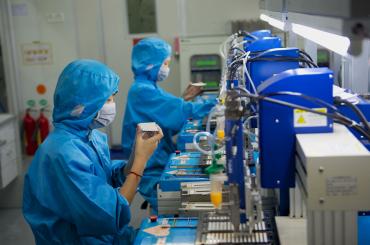
How China became a global pharmaceutical powerhouse
A national drug reimbursement reform in China, which traded price reductions for guaranteed patient access, dramatically expanded the country’s pharmaceutical innovation, offering a rare policy model that reconciles drug affordability with R&D incent...
Published 16.06.26
-
How China’s business registration reform boosted entrepreneurship and productivity
China’s 2014 business registration reform spurred greater market dynamism by lowering entry barriers, which increased firm turnover and allowed smaller yet more productive entrepreneurs to establish new businesses, boosting overall productivity and g...
Published 24.10.25
-
Implementing industrial policy effectively: Lessons from shipbuilding in China
Industrial policy in China aimed to make the country’s shipbuilding industry a world leader. Comprehensive data on shipyards worldwide reveals the huge scale of this policy, which boosted China's domestic investment, entry, and world market share dra...
Published 28.05.24
-
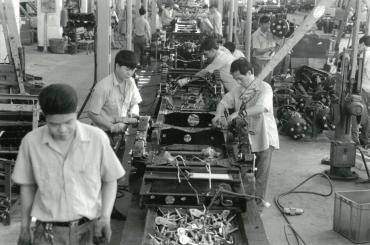
Did joint ventures help China's automobile industry?
Foreign direct investment, via 'quid pro quo', facilitated knowledge spillovers and quality upgrades in the Chinese automobile industry
Published 01.02.23
-
From fog to smog: The value of pollution information
China’s air quality monitoring and disclosure programme triggered a cascade of changes in household behaviour with significant health benefits
Published 24.02.20
-
The impact of air pollution on healthcare spending in China
Spending increases significantly during the two months following exposure to air pollution. Reducing pollution could save 60 billion yuan annually.
Published 18.04.19