

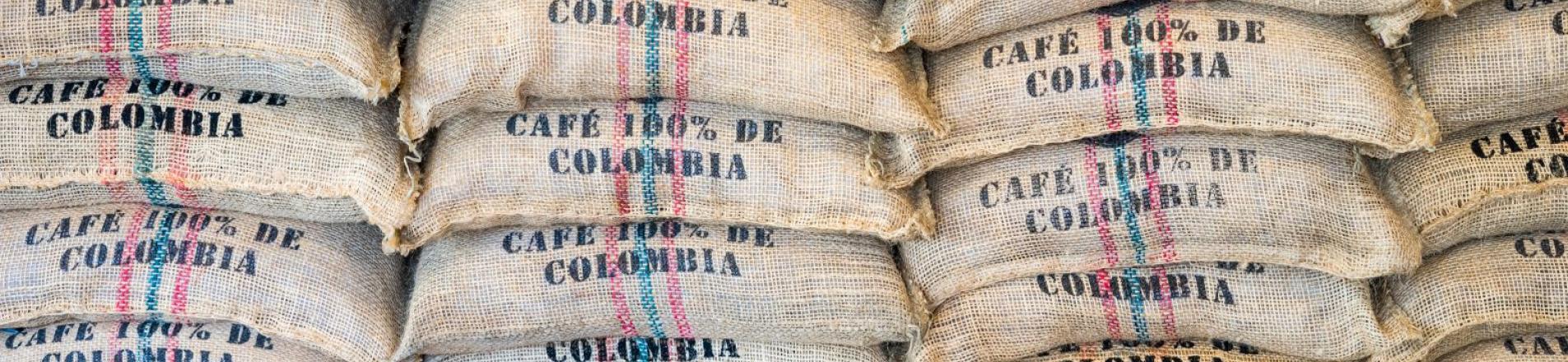






Under standard conditions in the Colombian coffee sector, the benefits of producing better coffee are not passed on to farmers, weakening their incentives to invest in higher-quality production. However, when a large international buyer required intermediaries to pay farmers higher prices for quality, this solved the hold-up problem, induced upgrading, and increased welfare along the supply chain.
In policy circles and among development practitioners, a common view is that quality upgrading in agriculture can help farmers and reduce poverty. For example, the International Coffee Organization (2020), the largest association of coffee-producing countries, writes that “upgrading facilitates producers’ access to high-value coffee markets and is often associated with higher farm income, since consumers pay a price premium for higher quality”.
If this view is correct, quality upgrading in agriculture could lift millions of people out of poverty, since around two-thirds of the global poor live in rural areas and depend on agriculture for their livelihoods (Baah et al. 2024). But for this to work, there must be rents to quality production and they must be shared with farmers. In new work, (Macchiavello, Miquel-Florensa, de Roux, Verhoogen, Bernasconi, and Farrell 2025) we study whether this is the case in Colombia’s coffee sector. We use internal data from two large exporters as well as production information from the universe of coffee farms in Colombia to shed light on this question.
Coffee production in Colombia
Colombia is the world’s third-largest coffee producer, after Brazil and Vietnam, and specialises in the Arabica variety. Around 550,000 small farmers, with an average farm size of about 1.8 hectares, harvest coffee cherries and depulp and dry them to produce ‘parchment’ coffee, which is then transported – often by cooperatives or intermediaries – to mills. There are around 90 mills distributed across the country, typically operated by exporters. At the mills, parchment coffee is processed to remove the husk and obtain ‘green’ coffee. The green beans are then sorted by size and defects; the graded coffee is packed and shipped to export ports.
Exporters offer different quality grades, with larger beans considered higher quality. The most commonly exported grade is ‘Usually Good Quality’ (UGQ). This standard export quality is already perceived as high relative to exports from other countries and earns a ‘Colombia’ premium in international markets. Above UGQ are higher-quality preparations, such as ‘Europe’ and ‘Extra’, and the highest quality grade with the largest beans is known as ‘Supremo’. There is natural variation in bean size, meaning that a batch of parchment coffee may contain a small share of Extra or Supremo beans even if the farmer has not incurred the higher costs required to consistently produce larger beans.
Under standard market conditions, farmers don’t benefit from producing better coffee
One of the exporters we study operates in a way that has long been standard for Colombian coffee exporters. The data include detailed information on batches of parchment coffee purchased from farmers and intermediaries, along with quality measures based on samples from each batch (up to the UGQ threshold). We link these data to milling and shipment information from the exporter, for which we observe the buyers, destination countries, quality grades, and prices of green coffee. This allows us to determine, for each batch of parchment coffee, the shares of different quality grades – UGQ, Extra, and Supremo – and to estimate price-cost margins by quality grade.
We find that margins are higher for higher-quality coffee: international buyers pay a premium to exporters for Extra and Supremo grades, but exporters do not pay farmers higher prices for higher-quality parchment coffee, conditional on the coffee meeting at least the UGQ standard. In other words, the price premium for higher-quality coffee is not passed through to farmers. Under these conditions, farmers have little incentive to incur the additional costs required to consistently produce Supremo-grade beans.
A vertical restraint as a possible solution
In our research, we present a game-theoretic model with non-enforceable contracts. The model predicts that the hold-up situation described above – in which farmers are not rewarded for higher-quality batches – can arise as an equilibrium. It also helps us understand a potential solution. Specifically, if a large international buyer has strong demand for high-quality coffee, it can impose a vertical restraint in its contract with the exporter. Under this arrangement, the international buyer pays a quality premium to the exporter and requires the exporter to commit to paying a corresponding premium to farmers. The model shows that the contract with a vertical restraint can be self-enforcing under a broader set of conditions than standard contracts and can lead farmers to invest in the plot improvements needed to raise quality.
The Sustainable Quality Program
We evaluate these theoretical predictions by studying the Sustainable Quality Program, implemented by a large international buyer together with another exporter which, at baseline, operated in a very similar way to the exporter described above.
The programme was launched in 2007 and
- provided training, seedlings, and other inputs to farmers
- required farmers to improve and certify their plot management practices
- mandated that the exporter pay a premium to farmers for Supremo-grade parchment coffee
- committed the buyer to pay a premium to the exporter for Supremo-grade green coffee, above the average premium for that quality in international markets
The programme was scaled up in two regions of Colombia in 2008. Using the timing of the rollout, difference-in-differences research designs, administrative data covering the universe of coffee exports from Colombia, and production variables from the universe of Colombian coffee farms over a ten-year period, we estimate the effects of the programme.
The programme increased production of high-quality coffee and led farmers to upgrade plots
We find that the buyer paid a higher premium than the international market to the exporter for Supremo-grade green coffee. Moreover, the exporter honoured the vertical restraint and paid farmers a premium for Supremo-grade parchment coffee relative to UGQ. Consistent with these incentives, the supply of Supremo-grade green coffee increased in treated regions.
We also find improvements in parchment quality at the mill gate. In particular, programme coffee shows a higher share of export-grade beans and fewer defects. Using administrative data on production practices from the universe of Colombian coffee farmers, we show that programme farmers upgraded their plots. Specifically, we construct an index measuring plot quality that combines key determinants of coffee tree productivity, such as tree age and variety. The programme increased this index by 0.17 standard deviations. We also find that the programme increased the area cultivated with coffee by 2–5%. Finally, programme take-up was higher among farmers with larger and better-managed plots at baseline.
Welfare along the coffee chain increased, benefiting farmers
Our previous results are consistent with the predictions of the theoretical model and suggest that the programme overcame the hold-up problem. To quantify the relative importance of the different mechanisms and to perform welfare calculations, we estimate an extension of our baseline model. Our calculations indicate that the programme increased total surplus along the Colombian coffee chain by 8–18%, with farmers capturing 36–62% of these gains. Although the programme consisted of a bundle of interventions, the model estimates suggest that the vertical restraint – that is, the exporter’s commitment to pay a quality premium to farmers – accounts for a large share of the welfare gains.
Lessons for policymakers and development practitioners
Our results are consistent with the view that quality upgrading can provide a path to higher incomes for farmers. However, we also show that this mechanism may not be viable under standard market conditions. In our setting, the hold-up problem was resolved by a buyer with sufficiently high willingness to pay, establishing a vertical restraint to ensure that quality price premia are transmitted from the export gate to the farm gate. From a policy perspective, this suggests that interventions should focus on helping exporters initiate, develop, and sustain long-term relationships with large international buyers that have strong and stable demand for high-quality coffee.
Several features of our context are important for the success of similar programmes. First, local implementation capacity was critical, with the second exporter relying on cooperatives to implement the programme and pass quality premia to farmers. Second, there must be sufficiently large and stable demand for the high-quality segment of the agricultural product in destination countries. These lessons are likely to extend beyond Colombian coffee: buyer-driven purchasing commitments may offer a path to quality upgrading and improved producer welfare for other products as well.
References
Baah, S K T, R Mungai, H Wu, M C Nguyen, M E Genoni, and C Lakner (2024), “The demographic profile of the global poor: Who are the poor and where do they live?” World Bank.
International Coffee Organization (2020), "Coffee development report 2020: The value of coffee – Sustainability, inclusiveness and resilience of the coffee global value chain."
Macchiavello, R, P Miquel-Florensa, N de Roux, E Verhoogen, M Bernasconi, and P Farrell (2025), “Quality upgrading in global supply chains: Evidence from Colombian coffee,” Unpublished manuscript.