


Recent work by Ahmed Mushfiq Mobarak
-

When rising food prices fuel state violence
Rising crop prices usually quiet conflict, as labourers choose farming over fighting. In Myanmar, rising rice prices instead fuelled state-led violence against civilians. Our findings challenge narratives that frame such atrocities as a reaction to i...
-

When should big data and algorithms be used to determine programme eligibility?
Although machine learning models using mobile phone data can make poverty targeting faster and more cost-effective, traditional survey-based methods remain more accurate. The optimal approach therefore depends on striking the right balance between co...
-
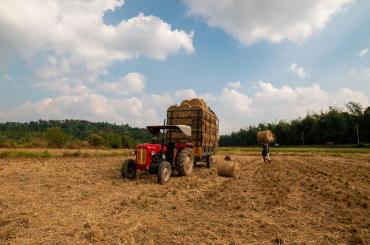
How internal migration is reshaping rural India
Internal migration of agricultural workers in India leads to a downsizing of farms near cities and an expansion in remote areas, prompting a spatial reorganisation of agriculture whereby remote, non-migrant households adopt more technology and expand...
-

Understanding rural-urban migration in the developing world
How does encouraging rural-urban migration in the developing world impact welfare?
-

Hitting the jackpot: The high returns of a Malaysia visa lottery for Bangladeshi workers
International migration can be transformative for low-skilled workers and their families, and governments can play important roles to ease the visa intermediation process, lower upfront costs, and ensure safer migration
-
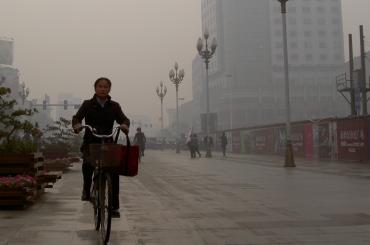
The productivity consequences of pollution-induced migration in China
Productivity losses from pollution through the indirect migration channel are approximately as much as the direct health costs of pollution
-

Catch and release: Regulation and evasion in the Chilean fish market
Less frequent enforcement of regulations on illegal fish sales makes it more difficult for vendors to find loopholes and increases overall compliance
-

Social learning in agriculture: Experimental evidence from Malawi
Can policymakers speed up the adoption of modern agricultural technologies through peer-to-peer learning?
-
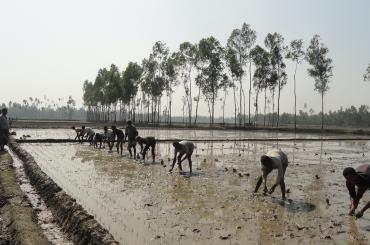
The path to scale: Replication, general equilibrium effects, and new settings
As a programme scales, it is important to check that RCT results are replicable and that general equilibrium effects are considered