

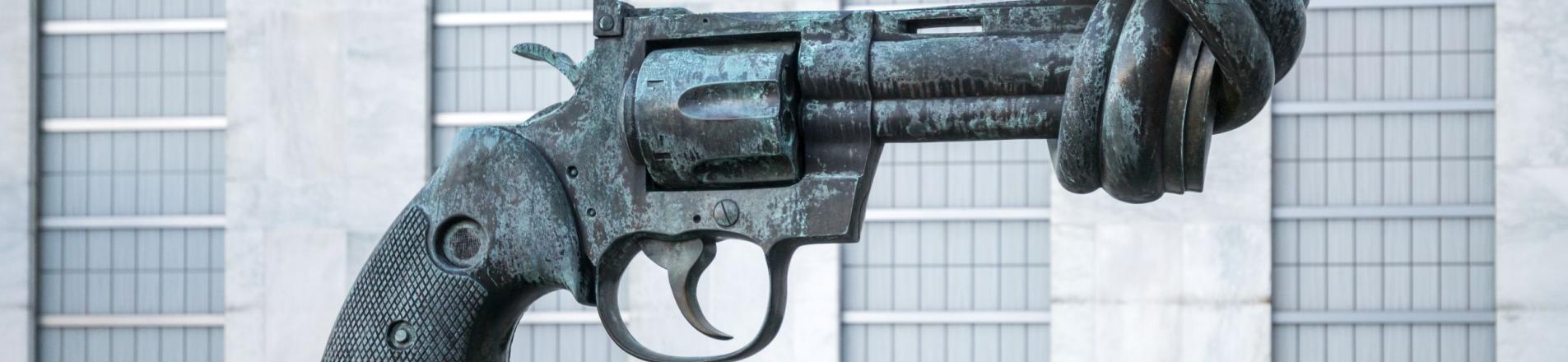


With violent conflict intensifying globally, bridging micro-level dynamics of trust and intergroup relations with macro-level institutional and international efforts is essential for achieving lasting peace.
Editor's note: This article is part of series covering CEPR's Reducing Conflict and Improving Performance in the Economy (ReCIPE) programme. Lisa Hultman and Salma Mousa are the ReCIPE Theme Leaders on Peacemaking, Peacebuilding, and Reconstruction.
The global conflict landscape has worsened over the past decade: wars on and in Gaza, Sudan, Ukraine, and Ethiopia have led to surges in battle deaths, civilian casualties, and mass displacement. It is estimated that nearly half a billion children currently live in conflict zones (Østby et al. 2023). The sharp increase in civil wars involving international actors has made violent conflict an even more pressing concern for the international community (Davies et al. 2025).
Bridging peacemaking and peacebuilding
Addressing this challenge requires both short-term peacemaking – through mediation, peacekeeping, and aid – and long-term peacebuilding efforts aimed at resolving root causes. Peacemaking can overcome deadlocks by addressing commitment problems between warring parties, while development and humanitarian programmes help stabilise post-conflict societies. Sustainable peace, however, also depends on tackling the deeper social dynamics of conflict like group-based grievances and intergroup prejudice, which dehumanises outgroups, fuels exclusion, and enables violence.
International interventions aimed at stopping immediate violence, and local peacebuilding efforts aimed at building everyday trust and tolerance, are mutually reinforcing and closely linked, yet the evidence bases remain disparate. We have conducted a review that seeks to bridge that gap by identifying promising points of convergence and highlighting key areas for future research (Hultman and Mousa 2025).
Establishing security through peacekeeping
Peacekeeping has proven effective at establishing security and reducing violence. Peacekeeping operations promote peace by influencing conflict behaviour and strengthening institutions in a variety of ways – incentivising peace, limiting violence, reinforcing the rule of law, supporting security sector reform, and aiding democratisation. Research highlights the importance of strong mandates, but also cautions against complex mandates that are difficult to implement.
Mandates also need to be accompanied by sufficient military capacity, and diversity of deployments, enabling missions to deploy and patrol where insecurities persist or may escalate. Police units within peacekeeping operations also play an important role in protecting civilians and addressing non-conventional forms of violence and armed groups.
Taken together, the evidence on peacekeeping provides strong support for increasing the cost of violence. However, it also offers critical perspectives that highlight the limitations and potential negative consequences of large international deployments. Understanding the impact of international interventions on local intergroup relations and long-term peacebuilding hence remains a key area of exploration.
Facilitating peace through mediation
Peace processes must resolve key issues underpinning political conflict, making mediation a relevant tool. Research is relatively optimistic about the role of mediation in assisting parties reach peace agreements and eventually more lasting peace. While early research tended to emphasise the importance of neutrality, more recent work has demonstrated the benefits of partial mediators. At the same time, legitimacy of the mediator and the mediation process remains central.
Another important aspect is the strategy mediators adopt. Here, research suggests that leverage is key to pushing conflict actors to engage in dialogue and make concessions, whereas a facilitative strategy can be more successful in reducing tensions in the long term. Again, we see that the international community may need to consider different – and coordinated – efforts to reach the two goals of making and building peace.
Incentivising peace through aid?
Armed conflict is a form of development in reverse. Countries risk getting stuck in a conflict trap where armed conflict impairs economic development, which in turn drives conflict. One important type of intervention for promoting peace therefore is international aid that aims to strengthen the economy and reduce poverty. If done right, research suggests that aid can reduce grievances in society, strengthen local institutions, and lower opportunity costs for engaging in violence. However, aid also risks incentivising violence and further undermining institutions. This highlights the need to further explore how multiple interventions can work together to enhance the prospects for peace.
Grassroots peacebuilding mechanisms
While peacekeeping and reconstruction establish security and rebuild institutions, lasting peace depends on grassroots efforts that foster positive intergroup interactions, rebuild trust, and reduce prejudice – reinforcing the gains of top-down interventions. We classify peacebuilding interventions into four categories: (1) direct intergroup contact; (2) indirect exposure, narratives, and perspective-taking; (3) inclusive nation-building; and (4) transitional justice and healing programmes. Many interventions straddle these categories, allowing us to identify shared psychosocial mechanisms behind change.
Pathways to cohesion
Our synthesis reveals a sobering pattern: direct contact between groups in conflict often yields limited or inconsistent cohesion gains, especially without political stability or institutional safeguards. In contrast, indirect approaches like empathy-based education and symbolic nation-building show more reliable effects, although questions remain about their durability. Across intervention types, education campaigns and elite messaging emerge as scalable tools for shifting norms and building public support for peace. These include post-war memorialisation efforts (e.g. museums and commemorative programmes), inclusive radio broadcasts that integrate stigmatised groups such as religious minorities and ex-combatants, and school-based initiatives like perspective-taking and incorporating more inclusive national histories into public curricula.
Direct contact initiatives – such as truth and reconciliation commissions that bring victims and perpetrators together – can foster post-war cohesion but must be accompanied by institutional safeguards and psychosocial support. Without these, contact interventions risk backlash, especially from majority-group members who may view such efforts as threats to the existing social order.
From attitudes to behaviour
Despite progress in evaluating local peacebuilding programmes, we still lack strong theory on how micro-level conflict escalates into communal violence. Key mechanisms – such as the activation of group identities, spread of hostile narratives, or erosion of trust – remain poorly understood. This limits our ability to judge whether peacebuilding efforts can effectively prevent future violence. The theoretical challenge is compounded by an empirical one: most evidence relies on surveys or lab games to measure intergroup trust, leaving it unclear whether such interventions influence the ultimate outcome of interest – communal violence. Research examining spontaneous, unorganised intergroup violence (e.g. herder-farmer conflicts) – which is more clearly tied to grassroots attitudes – can help address this theoretical challenge. To overcome the empirical one, research must move beyond the individual-level experiments common in social science research, and instead employ cluster-level interventions that directly measure communal violence as an outcome.
The way forward: Peacemaking, peacebuilding, and reconstruction
Ultimately, developing an integrated framework for peacemaking, peacebuilding, and reconstruction requires prioritising key research questions (Mousa and Hultman 2025):
- How do international interventions influence intergroup relationships and trust at the local level?
- Is peace more durable in communities that have experienced grassroots peacebuilding efforts?
- Can individual-level interventions create broader societal resilience through spillover effects or shifts in social norms?
- How can elites use their influence to support peace rather than exacerbate conflict?
Bridging micro- and macro-level approaches involves more than improving existing interventions – it demands a comprehensive framework that connects individual attitudes, community-level outcomes, and institutional efforts. Only by linking these evidence silos can we address the complex, overlapping challenges of achieving sustained peace.
References
Davies, S, T Pettersson, M Sollenberg, and M Öberg (2025), “Organized violence 1989–2024, and the challenges of identifying civilian victims,” Journal of Peace Research 62(4): 1223–1240.
Hultman, L, and S Mousa (2025), “From ceasefire to cohesion: An integrated review of peacemaking and peacebuilding,” Economic Policy, eiaf011.
Mousa, S, and L Hultman (2025), “Peacemaking, peacebuilding and post-war reconstruction,” VoxDev.
Østby, G, S A Rustad, and K Helskog (2023), “Children affected by armed conflict, 1989–2022,” Conflict Trends 08, Peace Research Institute Oslo.