

ReCIPE
-
Conflict and development
What have we learned from economic research on conflict? What key questions remain?
-
Variants of violence: How classifying conflicts helps us solve them
A core challenge in development economics is generalising country-specific findings across diverse contexts. Can a data-driven classification of conflict types help bridge the gap between deep case knowledge and broader comparative insight?
-

Institutions as engines of peace: Pathways to stability in an era of democratic decline
Inclusive institutions are key to sustaining peace – shaping incentives, deterring violence, and preventing cycles of fragility.
-

Can public policy prevent conflict and violence?
Evidence shows that public policies – ranging from education and therapy to social protection, aid, and refugee support – can reduce violence by reshaping incentives, though effectiveness in fragile contexts remains uncertain.
-
From conflict to cohesion: Coordinating local and international action to promote peace
With violent conflict intensifying globally, bridging micro-level dynamics of trust and intergroup relations with macro-level institutional and international efforts is essential for achieving lasting peace.
-

Promoting development in ethnically divided societies: Historical lessons on peace and prosperity
Many poor, ethnically divided societies are caught in an ‘ethnic growth trap’, where conflict, low public investment, and political economy dynamics reinforce each other, hindering development. Historical examples reveal that inter-ethnic economic co...
-
Climate change, natural resources, and conflict: Navigating a complex nexus
Extreme weather and the green transition are reshaping global conflict. We summarise the evidence on this trend and explore how policy can respond.
-

Geoeconomics and conflict: Bridging disciplines in the study of international warfare
International tensions and external wars are on the rise, with major economic implications. To study these, economists should bridge the divide between two fields: (i) research on conflict – the use of military weapons, and (ii) geoeconomics, which f...
-
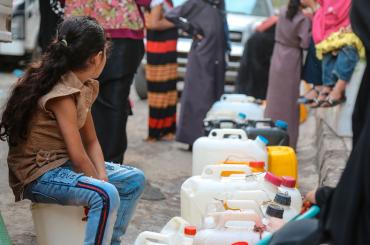
Gender dynamics in times of armed conflict: Victims, fighters, and peacebuilders
Armed conflict exacerbates gender inequality, but women are not just victims – they are also agents of change.