Cross-country measures of investment networks reveal how the structure of capital flows across sectors shifts systematically with development. This accounts for around one-third of global income disparities, with the payoff of policies shifting secto...
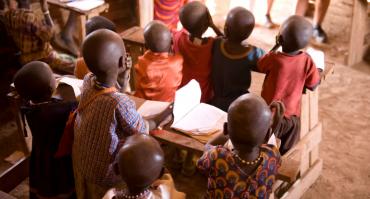
Education has been a major driver of global growth and poverty reduction since 1980, accounting for nearly half of overall income gains – boosting productivity while reducing inequality and making public schooling a key engine of poverty reduction.
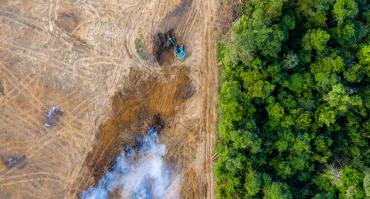
Climate change poses severe and unequal economic risks, especially for developing countries – where evidence gaps in mitigation, adaptation, and labour transitions highlight urgent research and policy priorities.
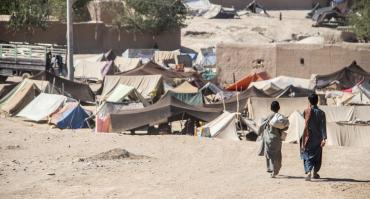
In fragile and conflict-affected situations (FCS), weak institutions, chronic instability, and repeated shocks have stalled growth for many years. With bold reforms and sustained global backing, FCS economies could harness untapped resources and demo...
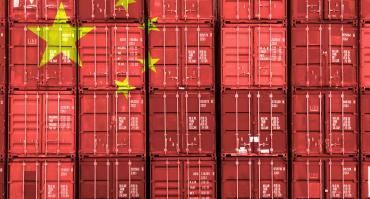
International capital flows can boost global growth and reduce inequality, but numerous geopolitical barriers distort where investment goes – often away from developing countries where it is most productive. Removing these barriers could increase glo...
Industrial policy is often discussed through high-level narratives and flagship initiatives, yet its implementation—particularly at the subnational level—remains opaque. By using large language models (LLMs) to systematically analyse over three milli...
Over the last fifteen years, the rate at which low-income countries are graduating to middle-income status has slowed markedly amid mounting headwinds. This trend presages more challenges ahead, but these countries also have considerable untapped pot...
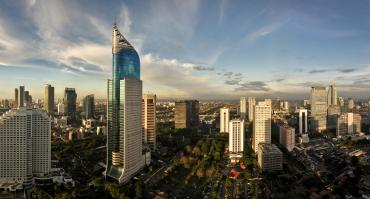
Indonesia aims to be one of the world's five largest economies by 2045. Which policies can help the country propel to the high-growth levels necessary to achieve this goal?