




View Chapter:
Downloads:
Chapter 2
Introduction
As of 2022, 19% of the global population lacked access to basic sanitation, despite the recognition of sanitation as a human right by the United Nations General Assembly in 2010 (WHO UNICEF Joint Monitoring Programme for Water Supply and Hygiene 2022a). In Africa alone, 193 million people still practiced open defaecation due to the absence of any sanitation facilities (WHO UNICEF Joint Monitoring Programme for Water Supply and Hygiene 2022b). At the same time, growing population density worldwide heightens both the risk and speed of disease transmission—particularly through the inadequate management of human waste, which is the primary target of improved sanitation interventions (Henderson and Turner 2020).[1]
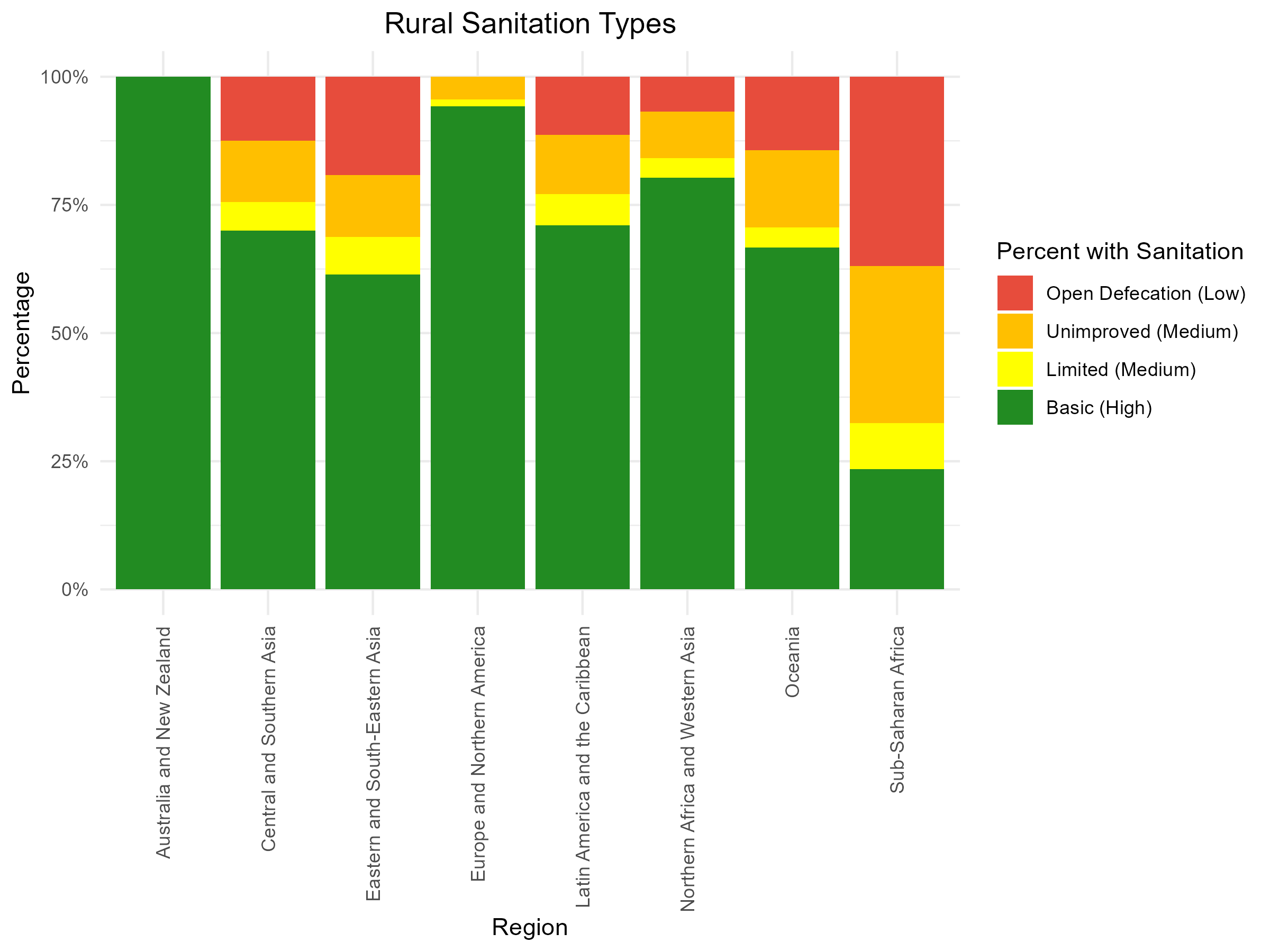
The health and welfare impacts of inadequate sanitation are significant. Poor sanitation is a major vector for faecal–oral disease transmission, contributing to diarrhoeal disease, soil-transmitted helminths, and other illnesses that disproportionately affect children. Globally, unsafe sanitation accounts for hundreds of thousands of preventable deaths each year, with diarrhoea remaining one of the leading causes of child mortality. As Figure 1 shows, mortality due to diarrhoeal disease remains especially high in the Global South. These disparities mirror large gaps in sanitation coverage (Figure 2), which persist across and within regions—particularly between rural and urban areas. While this urban–rural divide partly reflects the heightened risk of disease transmission in densely populated urban settings, coverage rates in both rural and urban areas remain far from adequate.
Figure 1: Mortality per 100,000 Children Under 5 from Diarrhoeal Disease
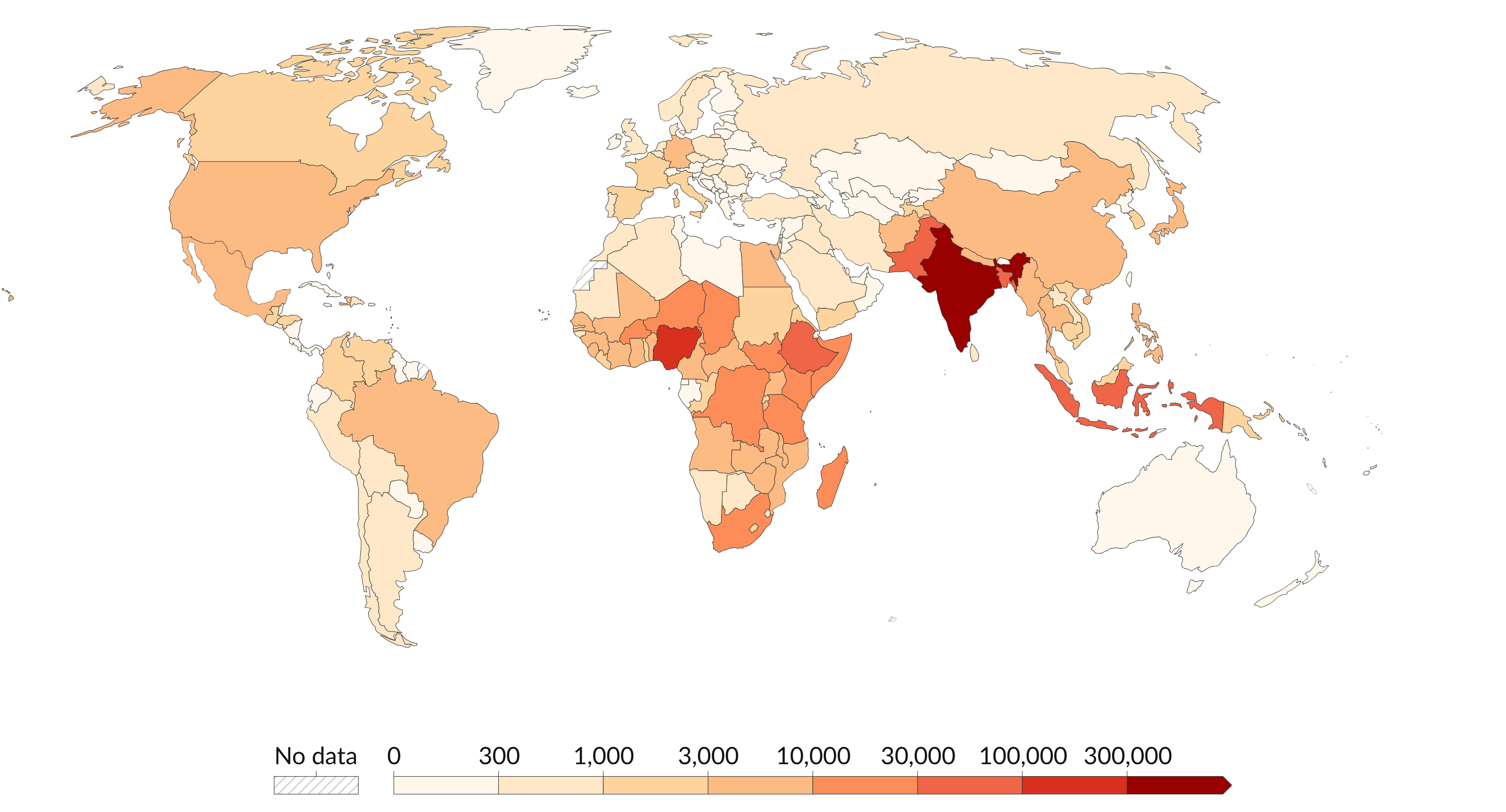
Source: Global Burden of Disease Collaborative Network (2024).
Urban–rural gaps in coverage reflect not only disparities in investment but also differences in sanitation technologies. While central urban areas often benefit from networked sanitation systems, much of the rapidly growing peri-urban fringe and most rural communities rely on non-networked solutions like pit latrines and septic tanks. These isolated systems have some advantages: they are faster to deploy, less reliant on long-term infrastructure, and more feasible in sparsely populated or resource-scarce settings. Yet, despite these benefits, most households express a clear preference for networked sanitation—and in high-density areas, networked systems tend to be more cost-effective and sustainable. Nonetheless, many cities continue to rely heavily on non-networked solutions as they struggle to keep pace with rapid urban expansion and aging infrastructure.
Figure 2: Global sanitation access: Rural and Urban
(a) Rural
 (b) Urban
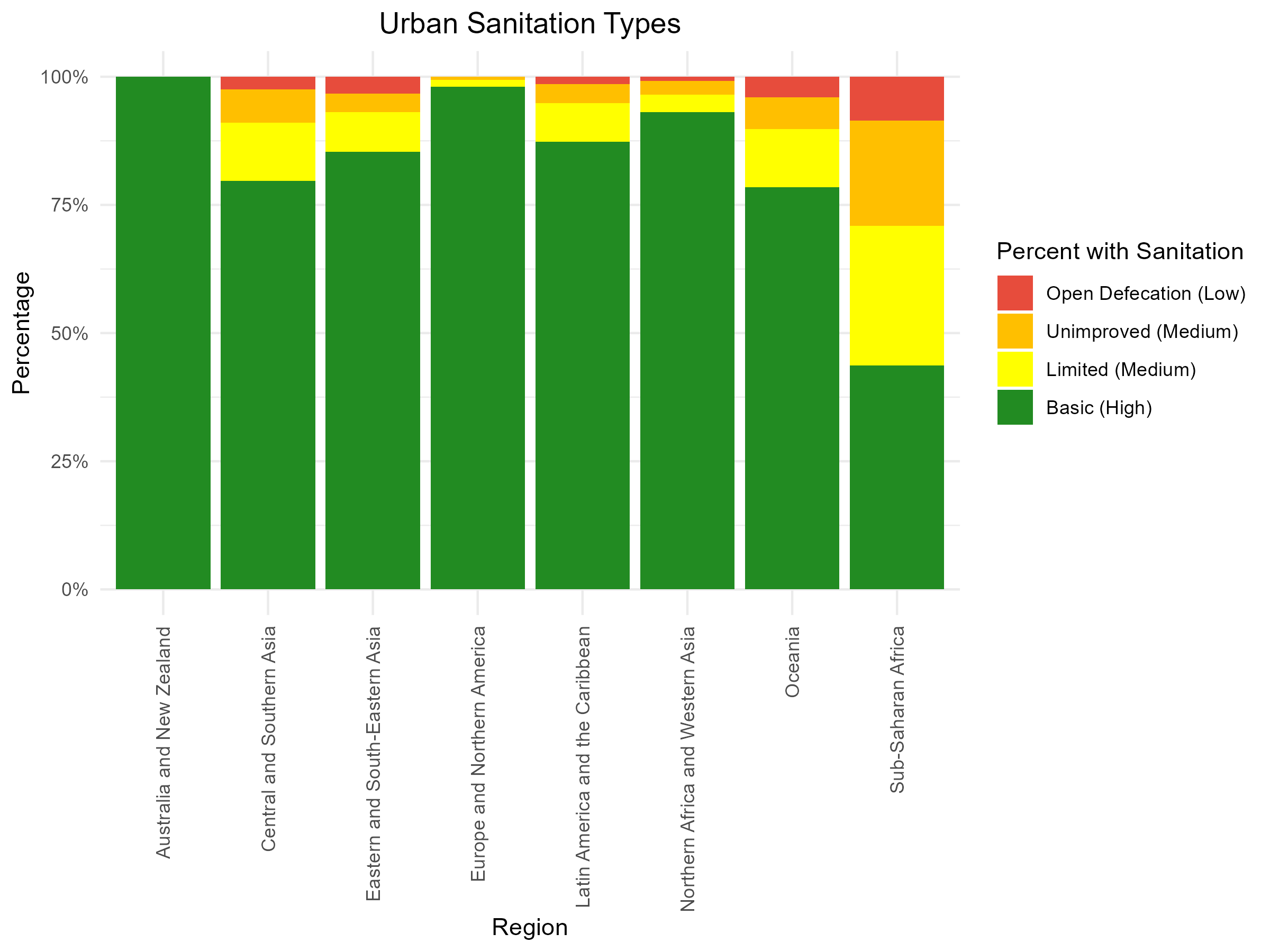
Notes: Panels (a) and (b) show the percentage of the population with access to certain sanitation infrastructure—basic, limited, unimproved, and no access (i.e. open defecation)—in various regions, broken down by urban/rural, as of 2022.
(c) Rural
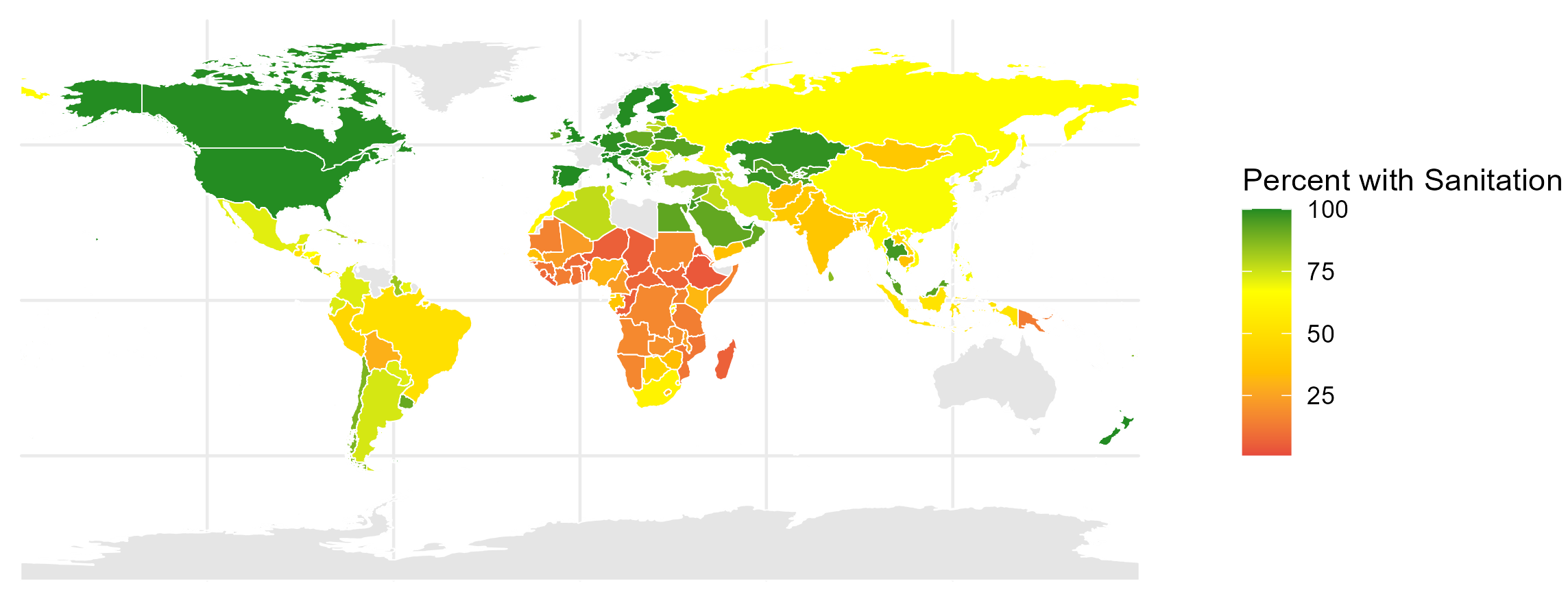
(d) Urban
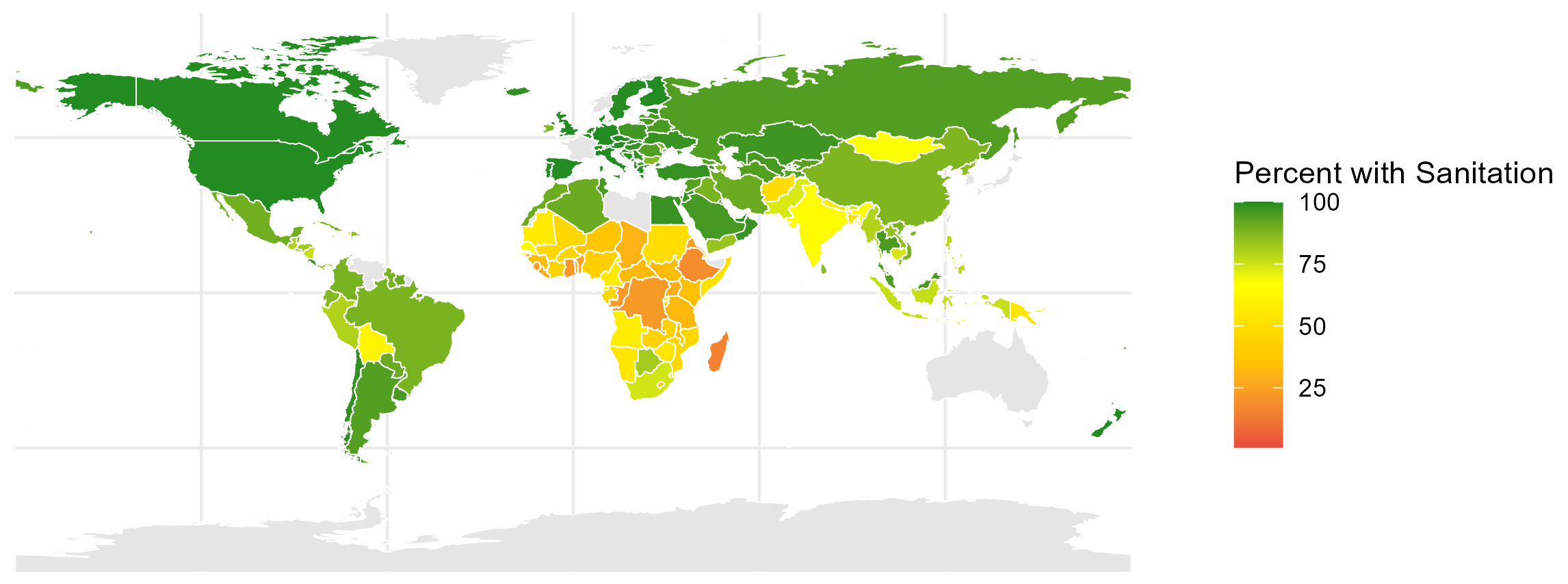
Notes: Panels (c) and (d) show the percentage of the population with access to basic sanitation in rural and urban areas for the same year. Source: Authors’ calculations based on the United Nations Joint Monitoring Programme for Water Supply, Sanitation and Hygiene (JMP) data.
These inequities are further reflected in wastewater treatment data: as shown in Figure 3, a sharp income gradient exists. Nearly all wastewater is treated in high-income countries, whereas in low- and middle-income countries (LMICs), treatment rates are highly variable. Treatment rates are particularly low in sub-Saharan Africa, underscoring the need for less expensive and more cost- effective solutions in LMICs.
Figure 3: GDP per Capita Versus Wastewater Treatment
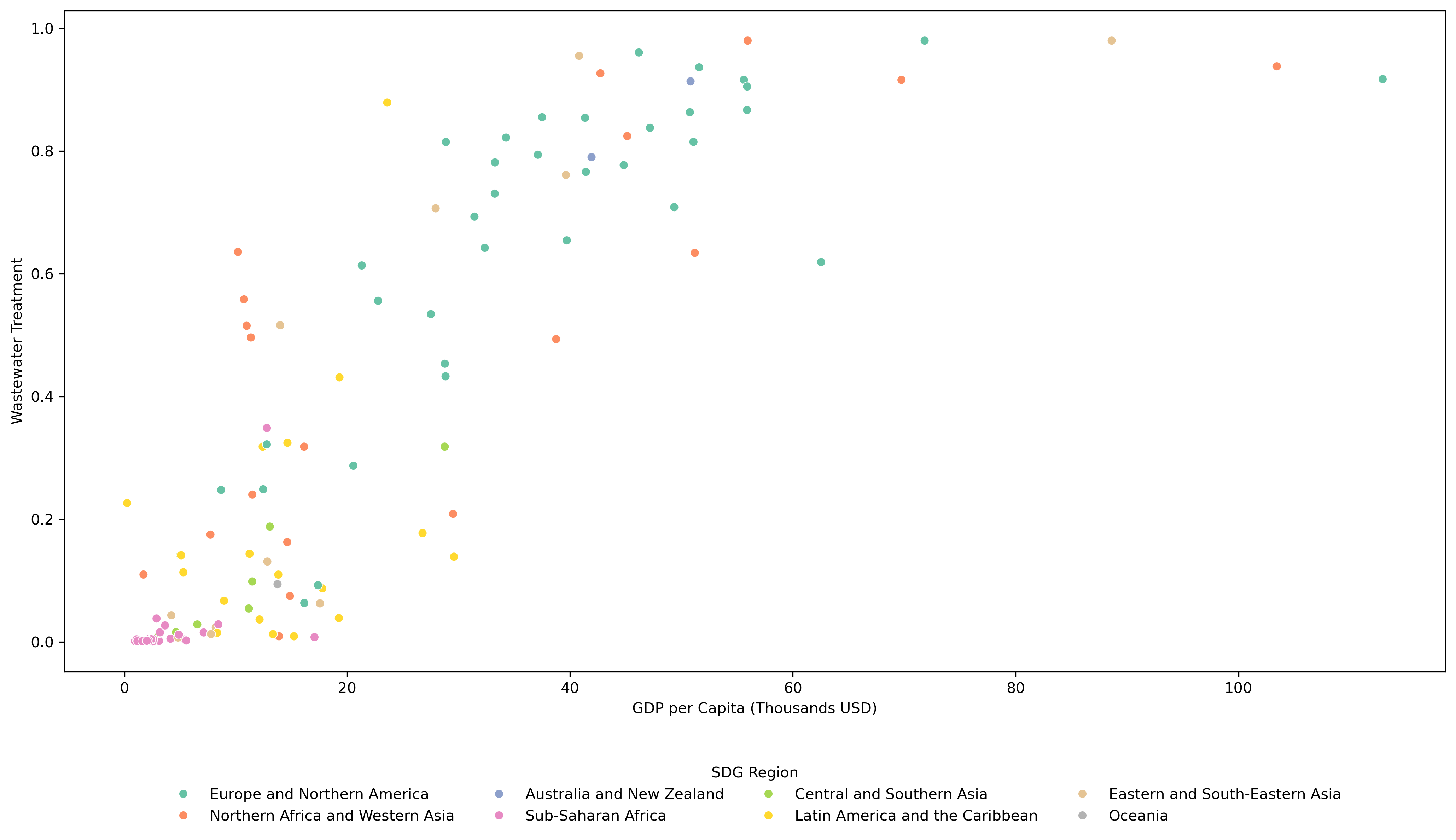
Source: Authors’ calculations based on UN JMP data and Penn World Tables.
This review abstracts from the wide variety of sanitation technologies and delivery models and instead focuses on two broad categories: networked and non-networked (isolated) sanitation infrastructure.[2] Policymakers must weigh these options in the context of constrained public budgets and competing priorities. While the most commonly cited benefit of sanitation is improved health, it is often suggested that gains extend further—to productivity, healthcare savings, dignity, safety (particularly for women and girls), tourism potential, and even tax compliance. In the first part of this review, we examine to what extent the economic literature has quantified these gains and under what conditions they materialise. In the second part, we focus on the effectiveness of different approaches to increasing sanitation coverage: large, big push investments made by the government; incentivising increased investment by households; and improving the supply side of the market.
For full reference list see the end of the conclusion chapter.
Contact VoxDev
If you have questions, feedback, or would like more information about this article, please feel free to reach out to the VoxDev team. We’re here to help with any inquiries and to provide further insights on our research and content.