New data from India shows that parents often retain a share of dowry, which may enable sons to migrate for work, and provide a new role for dowry in modern times.
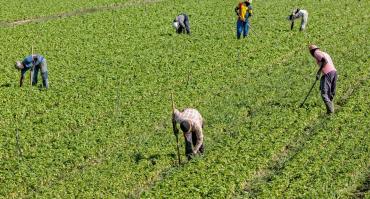
Extreme heat damages crops and increases the number of strongly undernourished households in terms of calories, iron, and other nutrients. While some households cope by buying food grown elsewhere, the poorest remain highly vulnerable.
Evidence from India suggests that women tend to wake earlier and eat later than men, leading to reduced sleep, leisure, and social time – which worsens physical and mental health outcomes. These disparities persist across economic groups, remain larg...
Despite recent gains due to rural self-employment, India’s female labour force participation remains constrained by entrenched social norms and a limited availability of quality jobs – keeping the gender gap in work persistently wide.
Analysis of over five million criminal cases in India finds no in-group bias in acquittal decisions based on shared religion, gender, or caste – contrasting with patterns documented in other countries.
High institutional and regulatory barriers make it unusually costly for manufacturing firms to exit in India – discouraging entry, keeping inefficient firms afloat, and lowering productivity.
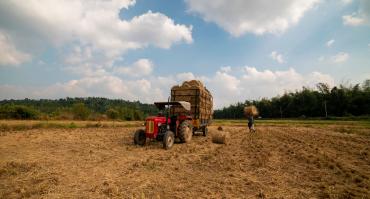
Internal migration of agricultural workers in India leads to a downsizing of farms near cities and an expansion in remote areas, prompting a spatial reorganisation of agriculture whereby remote, non-migrant households adopt more technology and expand...
A government-led, state-wide programme in India (the SHE Pad Scheme) which provided free sanitary pads in schools significantly reduced dropout rates among adolescent girls, primarily by increasing school attendance.