

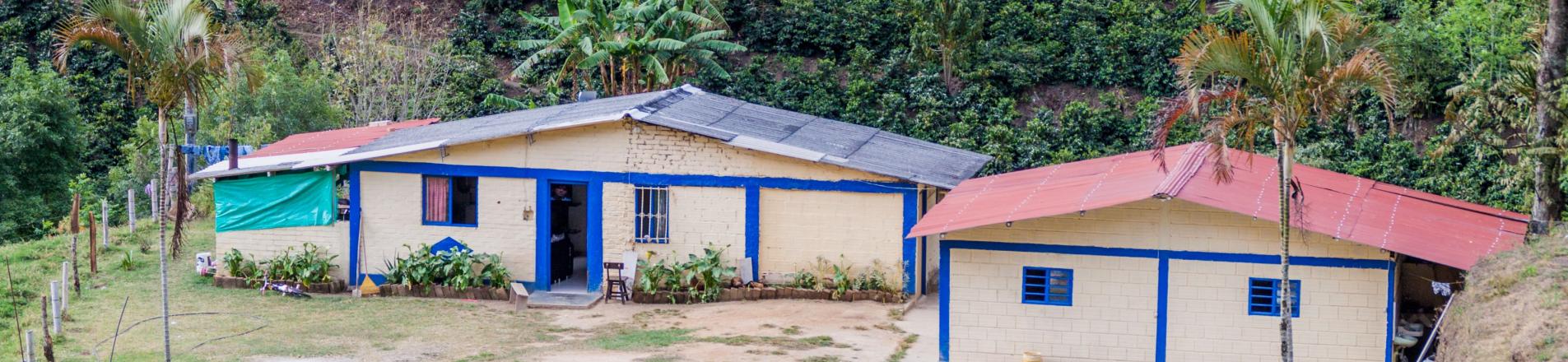




Evidence from Colombia shows that weather shocks induce a fragmentation of the farm-size distribution and exacerbate the prevalence of small farms in an economy, shedding light on how climate change might lower agricultural productivity in developing countries.
Editor’s note: For a broader synthesis of themes covered in this article, check out our VoxDevLit on Climate Adaptation.
In many developing countries, agriculture is dominated by millions of small-scale farms that are exposed to negative income shocks such as droughts, floods, and extreme temperatures. In the absence of effective insurance mechanisms, these shocks often force rural households to make drastic adjustments to their consumption and investment choices. One particularly important—and understudied—aspect of this response is how households make decisions about holding onto or selling land after experiencing such negative shocks.
Previous research has shown that the predominance of small farms is a significant constraint on agricultural productivity (Foster and Rosenzweig 2022), and that this pattern is partly the result of institutional distortions that hinder efficient land allocation (Adamopoulos and Restuccia 2014). Less understood, however, is how the dynamics of household consumption and investment in the wake of negative income shocks determine the farm size distribution in an economy. In Arteaga et al. 2025, we study how negative weather shocks influence land transactions and farm size in developing countries.
Adverse weather shocks induce the exit of small farmers and entry of previously landless households into agriculture
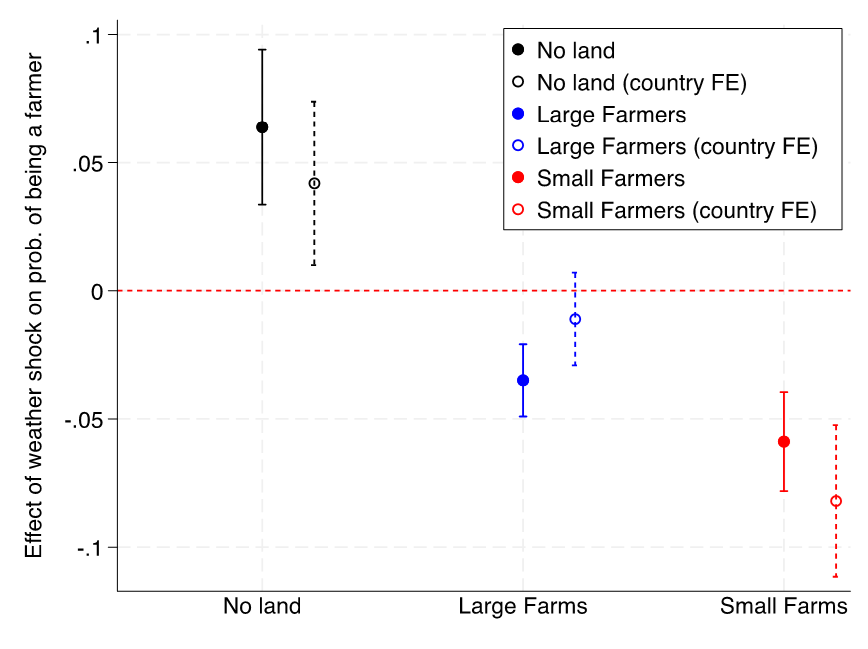
By bringing together data from several household-level surveys, we document two baseline facts. First, entry and exit rates in agriculture are high with smaller farms experiencing more churn. Second, negative weather shocks lead to large increases in the probability of incumbent households exiting agriculture–with the impact being larger for small farms–and an increase in the probability of non-farming households entering agriculture (Figure 1).
Figure 1: Effect of a negative weather shocks on households’ probability of entering and exiting the agricultural sector
Adverse weather increases land sales and lowers average farm size
What do the patterns documented above imply for the farm size distribution of an economy? We investigate this question by combining rich administrative data from Colombia on the transaction history of hundreds of thousands of agricultural land plots across the country, cadastral registries with yearly information on size and property status of all rural properties in each municipality, and daily temperature estimates from the ERA5 global climate reanalysis dataset.
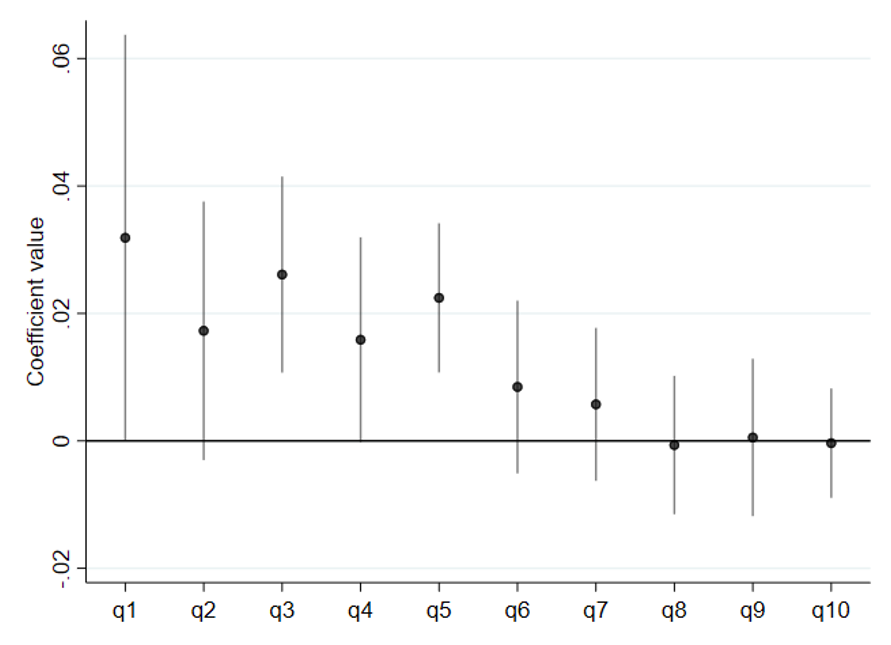
Exploiting exogenous variation in temperature anomalies around each municipality’s historical weather distribution, we find that increases in the number of days with extreme temperatures leads to a surge in land transactions–both sales and mortgages–with the majority of purchases being made by previously landless individuals. We also find that the number of individuals exiting agriculture (i.e. selling all of their landholdings) is more than offset by the number of individuals entering, which leads to a reduction in average farm sizes. Moreover, by estimating the change in the number of farms across fixed size bins, we find that this reduction in average farm size is primarily driven by the entry of relatively small farms with little change in the number of larger farms (Figure 2).
In short, our results show that weather shocks induce a fragmentation of the farm-size distribution and exacerbate the prevalence of small farms in an economy.
Figure 2: Impact of adverse weather shocks in the number of farmers by farm-size decile
We further corroborate that the results based on administrative data align with household-level responses to shocks using Colombia’s longitudinal household survey (ELCA). Comparing differences in farmers’ decisions across municipalities more or less affected by extreme temperatures, we find that temperature shocks lead to substantial reductions in both asset ownership and per capita consumption, lower probability of owning land or animals, and higher probability of migration. These results are consistent with similar adjustment responses documented by other studies in diverse contexts (Ibáñez et al. 2025, Jagnani et al. 2021, Jessoe et al. 2018).
Why income shocks affect farm size distribution
Why do covariate income shocks lead to reductions in average farm sizes and an increase in the number of small farms? To rationalise the observed results we build a dynamic, heterogeneous household model in which individuals choose whether to work in or out of agriculture and, if they choose to be a farmer, how much land to own. In our model, productivity shocks of varying magnitudes impact households every season. Because land ownership decisions have to be made before the shock (i.e. weather) realisation occurs, land isn’t just used for farming and wealth accumulation—it also serves as a way for families to manage risk when times are tough. Together, these choices about work and land ownership shape the overall pattern of farm sizes and aggregate productivity in the economy.
We calibrate this model to the Colombian data and show that it is capable of reproducing our main reduced-form results: simulating a sector-wide, temporary drop in productivity leads to a proportion of small farmers selling all of their landholdings and exiting the sector. This concurrent drop in land prices leads to an even larger proportion of non-farmers buying land and entering agriculture, driving a net reduction in average farm size.
The model further shows how the recomposition of individual skill across sectors driven by the exit and entry of individuals into agriculture leads to reductions in aggregate productivity that persist much longer in time than the duration of the original shock.
Implications for agriculture and climate policy
Weather risk thus has an economic cost far beyond a lost harvest. By impacting land markets, exacerbating the skewed distribution of farm sizes, and altering the skill composition of firms in agriculture, temporary shocks can have lasting repercussions on aggregate productivity. As climate change intensifies, our findings highlight an additional channel through which households’ inability to insure against risk exacerbates the productivity gap between rich and poor countries. We emphasise that low agricultural productivity may be exacerbated by the aggregate effects of individual responses to uninsured risk, as well as the importance of designing and expanding access to financial tools that help farmers mitigate the impact of increasingly frequent weather shocks.
References
Adamopoulos, T., and Restuccia, D., 2014, “The size distribution of farms and international productivity differences,” American Economic Review, 104(6): 1667–1697.
Arteaga, J., de Roux, N., Gáfaro, M., Ibáñez, A., and Pellegrina, H. S., 2025, “Farm size distribution, weather shocks, and agricultural productivity,” Unpublished manuscript.
Foster, A. D., and Rosenzweig, M. R., 2022, “Are there too many farms in the world? Labor market transaction costs, machine capacities, and optimal farm size,” Journal of Political Economy, 130(3): 636–680.
Ibáñez, A. M., Quigua, J., Romero, J., and Velásquez, A., 2022, “Responses to temperature shocks: Labor markets and migration decisions in El Salvador,” IDB Working Paper Series.
Jagnani, M., Barrett, C. B., Liu, Y., and You, L., 2021, “Within-season producer response to warmer temperatures: Defensive investments by Kenyan farmers,” Economic Journal, 131(633): 392–419.
Jessoe, K., Manning, D. T., and Taylor, J. E., 2018, “Climate change and labour allocation in rural Mexico: Evidence from annual fluctuations in weather,” Economic Journal, 128(608): 230–261.