

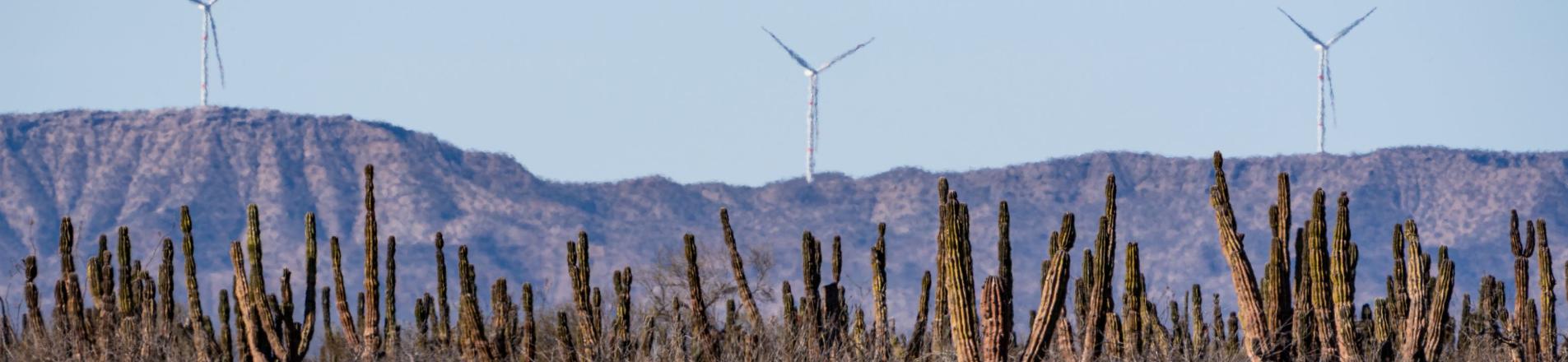

A one-size-fits-all approach to climate change won’t work in Mexico, where climate adaptation is highly unequal. Currently, private responses such as air conditioning, migration, and financial adjustment play a central role. These mechanisms are often more accessible to higher-income households while exacerbating inequality and shifting climate risks onto poorer, informal, and rural populations, as well as overburdening health, labour, and financial systems.
Editor’s note: This article is part of a series of posts reflecting on how the evidence from VoxDevLits applies to specific contexts, and is published in collaboration with the International Economic Association’s Women in Leadership in Economics initiative. This post explores how evidence on Climate Adaptation relates to Mexico.
Economically and socially, Mexico is full of contradictions. It is the fifteenth-largest economy in the world (World Bank 2025) and among the top 20 countries globally by number of billionaires. At the same time, about 55% of the workforce is informal, and over 90% of firms are micro-, small-, or medium-sized enterprises with limited capacity for climate-risk management or adaptation investment. These divides sharpen in per-capita terms: the Mexico City metropolitan area reaches roughly US$30,000 GDP per capita (PPP), and San Pedro Garza García – Mexico’s wealthiest municipality – regularly exceeds $60,000 PPP, placing parts of urban Mexico on par with Spain and Italy.
At the other extreme, average incomes in many southern states approach $5,000, comparable to Ghana or Nepal, with many municipalities below $3,500, similar to Mali or Benin. Given this spatial, ecological, and economic fragmentation, climate adaptation in Mexico cannot be conceived as a uniform national policy. Rather, adaptation must be approached recognising the multiple ‘Mexicos’ – arid and tropical, formal and informal, rural and urban. Other approaches would lack both economic relevance and political viability. The country has elected two consecutive presidents from Morena, a movement-turned-hegemonic-party that appeals to the economically forgotten Mexico. Morena’s narrative resonates particularly in rural southern regions, where national economic growth has failed to translate into local livelihood improvements (IFC 2025, Ponce 2024).
Following this logic, I discuss separately the challenges of urban and metropolitan Mexico and the adaptation challenges of rural Mexico. Still, temperature increases and precipitation decreases are projected for the majority of the territory, threatening population health and welfare.
Climate and health: Individual and systemic adaptation
The mortality and morbidity costs of climate change represent a large share of aggregate climate damages, particularly in poorer and hotter regions. Carleton et al. (2022) estimate that the global mortality risk increase from climate change, net of adaptation, will amount to roughly 3.2% of global GDP in 2100 under a high-emissions scenario.
For Mexico specifically, recent evidence shows large heat-related health impacts, operating both directly and through system constraints. Wilson et al. (2024) show that humid heat disproportionately increases mortality among younger people: individuals under 35 account for 75% of recent heat-related deaths and 87% of heat-related life-years lost (Wilson et al. 2024). Aguilar-Gómez et al. (2025) document that days above 34°C generate sharp increases in emergency department visits and hospitalisations, with substantial congestion spillovers. Rising demand overwhelms hospitals, forcing sicker patients to be discharged home, and causing excess deaths.
At the individual level, adaptation can reduce exposure to climate risks, but access to adaptive tools is highly unequal. Defensive investment in cooling technologies is a prime example: air conditioning decreases heat-related mortality (Davis and Gertler 2025, Barreca et al. 2016, ). Davis et al. (2021) analyse household microdata across 16 countries, including Mexico, and show that residential air-conditioning adoption is highly concentrated among high-income households both across and within countries, implying that a major protective technology against heat is distributed in a way that can widen inequality in climate-health exposure, but there are substantial international gaps in monitoring infrastructure and reporting intensity. Information is another critical input into exposure avoidance, public prevention, and workplace safety. In this dimension, Mexico performs better than low-income countries but remains below high-income regions in short-term temperature forecast accuracy (Linsenmeier and Shrader 2023).
At the systemic level, the health sector itself is a central adaptation margin. The congestion channel in Aguilar-Gómez et al. (2025) implies that expanding capacity and improving surge management can reduce climate-health damages (Aguilar-Gómez et al. 2025). Cohen and Dechezleprêtre (2022) provide complementary evidence that public healthcare access mitigates temperature-related mortality in Mexico: they show that Mexico’s Seguro Popular reduced cold-related mortality, underscoring how health system access and coverage lower climate vulnerability (Cohen and Dechezleprêtre 2022).
Challenges in rural Mexico: Agriculture, disasters and financial inclusion
Mexican agriculture is highly heterogeneous, combining rainfed seasonal crops (e.g. maize and beans), perennial systems (e.g. coffee, fruit trees, agave), and irrigated commercial agriculture concentrated in the north and northwest. Approximately 12–13% of the employed population depend directly on agriculture for their livelihood, with rainfed smallholders accounting for the majority of producers and bearing disproportionate exposure to climate shocks. This structure makes rural households particularly vulnerable to droughts, floods, and extreme weather events, while limited access to formal credit, insurance, and savings instruments constrains their capacity to smooth income and invest in adaptation (Kala et al. 2023).
Recent work has identified that extreme weather shifts firms’ costs and demand (via consumer behavioural responses), creating liquidity shortages for firms. Aguilar-Gomez et al. (2024) find that small and medium firms in the country do not obtain the financing they need to cope with the harmful effects of extreme weather. Instead, unusually hot days increase delinquency rates, primarily affecting the agricultural sector, but also non-agricultural industries that rely heavily on local demand. These results are consistent with general equilibrium spillovers from agriculture. Following temperature shocks, affected firms face tighter credit conditions, higher interest rates, and greater collateral requirements.
At the household level, Becerra et al. (2025) show that in contexts with limited access to formal credit or agricultural insurance, drought-induced income losses lead vulnerable individuals to default on credit cards. This suggests that, because default restricts future access to credit, droughts can generate poverty traps.
Climate change is expected to reduce agricultural productivity in tropical and subtropical areas, including Mexico. The optimal adaptation response involves reallocating capital and labour away from agriculture towards sectors and regions with comparative advantage. However, regional evidence suggests pervasive frictions constrain this process. Albert et al. (2021) document that in Brazil, persistent increases in dryness do not generate capital reallocation but a sharp reduction in credit to all sectors. In addition, they find that spatial labour market frictions constrain the reallocation process from agriculture to manufacturing.
Mexico’s data-rich environment enabled the creation of FONDEN, the world’s first national-level disaster index insurance fund. Del Valle et al. (2020) find that the fund accelerated municipal recovery after extreme rainfall by supporting infrastructure reconstruction; in a country with endemic violence, it also mitigated disaster-related mortality (Del Valle et al. 2024). The subsequent dismantling of FONDEN illustrates the fragility of effective institutions in the era of populism, as it was replaced by a more discretionary disaster-financing system alongside the rollback of other evidence-based programmes, including the country’s landmark CCT Progresa/Oportunidades/Prospera. Discretionality and populism remain major threats to effective climate adaptation.
Disaster-related violence in Mexico is not gender-neutral. Aguilar-Gómez et al. (2025) find that droughts increase public-sphere violence against both men and women, but also generate a large rise in intimate partner violence (IPV). These gender-climate dynamics remain understudied but are highly relevant in a country where 43.9% of women have experienced IPV (ENVIPE/ENDIREH 2021).
Migration and other transitions
Mexico has two of the most divergent borders in the world: to the north, a 3,145-km boundary with the US, the largest destination for international migrants, and a shorter but more porous southern border with Guatemala and Belize that functions as a major overland migration corridor. In 2023 alone, over 500,000 people crossed the southern border irregularly, and over 2.4 million encounters were registered at the US–Mexico border.
Migration has become a global coping strategy for climate shocks, particularly in conflict-prone (Missirian and Schlenker 2017) and agriculture-dependent regions (Cai et al. 2016). A growing share of flows through Mexico is already described as climate-related, with environmental stressors shaping mobility decisions among migrants from Central America, the Caribbean, and increasingly Venezuela (Baez et al. 2017, Huber et al. 2023). Internally, climate also shapes mobility. Extreme heat increases out-migration from rural municipalities to both US destinations and domestic urban centres (Jessoe et al. 2016), while Nawrotzki et al. (2017) find that each additional drought month increases the odds of rural-urban migration by 3.6%.
From the perspective of the extended household, remittances are a key income-diversification mechanism. They are Mexico’s second-largest source of foreign exchange, surpassing oil, tourism, and FDI in recent years. Becerra-Ornelas et al. (2025) find that remittances increase during droughts in both agricultural and non-agricultural regions, helping recipient households avoid credit default.
Cities might be receiving migration in regions where climate change reduces agricultural productivity. Albert et al. (2021) highlight that, for the case of Brazil, this labour is not necessarily reallocating to the most productive firms, with ambiguous welfare effects. Furthermore, cities in the country are grappling with providing water, housing, and safe employment to rapidly expanding population.
Challenges in urban Mexico: Water, infrastructure, and climate vulnerability
In Mexico, occupation is a central determinant of climate vulnerability. Heat-related mortality risk varies sharply by occupation, with young adults in climate-exposed jobs, especially agriculture, experiencing much higher death rates on hot days. A 15- to 24-year-old agricultural worker is more than ten times as likely to die from heat exposure as a peer in professional employment, highlighting the unequal distribution of protective infrastructure and adaptive technologies (Bressler et al. 2025).
Urban areas are not immune. Informal occupations, including street vending and gig-economy delivery work, remain highly exposed to extreme heat. Evidence shows that app-based food delivery platforms allow higher-income consumers to adapt by shifting consumption towards delivery services, while shifting climate risk onto workers. In Mexico, delivery workers identified in the ENOE work on average 1.7 additional hours on days with extreme heat (above 36°C), without higher hourly wages, revealing the absence of compensating differentials and highlighting how urban adaptation can exacerbate labour inequality (Papp 2024).
Water scarcity is an increasingly urgent challenge in Mexican cities. Mexico City and Tijuana depend on imported water, while Monterrey relies on unstable reservoirs. Climate change, population growth, and ageing infrastructure all contribute to rising risk. In Mexico City, water shortages reduce hours worked: a one-standard-deviation increase in shortages leads to a 3.3% drop in weekly hours (Rico-Straffon 2025), particularly among women responsible for household water provision. Throughout the country, low water quality and availability are linked to sugary drink consumption – one of the drivers of Mexico’s obesity epidemic – and when unaffordable, to diarrheal disease (Gutiérrez and Rubli 2022), compounding the climate-health nexus.
Finally, aquifer overexploitation is causing cities like Mexico City, Jakarta, and Tehran to sink. Several areas in Mexico City have lost multiple meters of elevation in recent decades, damaging buildings, roads, and infrastructure (Hackett 2025). These deformations increase household vulnerability by compromising housing safety, service access, and the resilience of critical infrastructure during heatwaves, floods, and seismic events, intensifying already high climate risk.
Implications for climate policy in Mexico
Climate change in Mexico is multi-dimensional. It interacts with deep regional, social, and institutional divides. Health systems, rural livelihoods, migration, and urban infrastructure each distinct but interconnected adaptation frontiers. Effective climate policy must move beyond uniform national responses and account for the multiple ‘Mexicos’ shaped by inequality, informality, and spatial fragmentation. Without adaptive strategies that are institutionally credible and distribution-sensitive, climate change risks reinforcing existing vulnerabilities.
References
Aguilar-Gómez, S, and A Salazar-Díaz (2025), “Droughts and domestic violence: Measuring the gender–climate nexus,” Unpublished manuscript.
Aguilar-Gómez, S, E Gutierrez, D Heres, D Jaume, and M Tobal (2024), “Thermal stress and financial distress: Extreme temperatures and firms’ loan defaults in Mexico,” Journal of Development Economics, 168: 103246.
Aguilar-Gómez, S, J S G Zivin, and M J Neidell (2025), “Killer congestion: Temperature, healthcare utilization and patient outcomes,” Unpublished manuscript.
Albert, C, P Bustos, and J Ponticelli (2021), “The effects of climate change on labor and capital reallocation,” Unpublished manuscript.
Baez, J, G Caruso, V Mueller, and C Niu (2017), “Heat exposure and youth migration in Central America and the Caribbean,” American Economic Review, 107: 446–450.
Barreca, A, K Clay, O Deschênes, M Greenstone, and J S Shapiro (2016), “Adapting to climate change: The remarkable decline in the US temperature–mortality relationship over the twentieth century,” Journal of Political Economy, 124: 105–159.
Becerra-Ornelas, A, F N Daverio Occhini, D Jaume, P Pérez Ponciano, and M Tobal (2025), “Dry weather, dry wallet? Heterogeneous uses of financial tools during dryness in a middle-income economy,” Unpublished manuscript.
Bressler, R D, A Papp, L Sarmiento, J G Shrader, and A J Wilson (2025), “Working under the sun: The role of occupation in temperature-related mortality in Mexico,” Unpublished manuscript.
Cai, R, S Feng, M Oppenheimer, and M Pytlikova (2016), “Climate variability and international migration: The importance of the agricultural linkage,” Journal of Environmental Economics and Management, 79: 135–151.
Carleton, T, A Jina, M Delgado, M Greenstone, T Houser, S Hsiang, et al. (2022), “Valuing the global mortality consequences of climate change accounting for adaptation costs and benefits,” Quarterly Journal of Economics, 137: 2037–2105.
Cohen, F, and A Dechezleprêtre (2022), “Mortality, temperature, and public health provision: Evidence from Mexico,” American Economic Journal: Economic Policy, 14: 161–192.
Davis, L, P Gertler, S Jarvis, and C Wolfram (2021), “Air conditioning and global inequality,” Global Environmental Change, 69: 102299.
Davis, L W, and P J Gertler (2025), “Why did air conditioning adoption accelerate faster than predicted? Evidence from Mexico,” Unpublished manuscript.
del Valle, A, A de Janvry, and E Sadoulet (2020), “Rules for recovery: Impact of indexed disaster funds on shock coping in Mexico,” American Economic Journal: Applied Economics, 12: 164–195.
del Valle, A (2024), “Saving lives with indexed disaster funds: Evidence from Mexico,” American Economic Journal: Economic Policy, 16: 442–479.
Gutierrez, E, and A Rubli (2022), “Local water quality, diarrheal disease, and the unintended consequences of soda taxes,” World Bank Economic Review, 36: 1–18.
Hackett, L, and C Rodríguez-Zamora (2025), “Land subsidence: Environmental risk in housing markets in Mexico City,” Unpublished manuscript.
Huber, J, I Madurga-Lopez, U Murray, P C McKeown, G Pacillo, P Laderach, and C Spillane (2023), “Climate-related migration and the climate-security-migration nexus in the Central American Dry Corridor,” Climatic Change, 176: 79.
International Finance Corporation (IFC) (2025), “Mexico southern states study,” Unpublished manuscript.
Instituto Nacional de Estadística y Geografía (INEGI) (2021), “Encuesta Nacional sobre la Dinámica de las Relaciones en los Hogares (ENDIREH),” Unpublished manuscript.
Jessoe, K, D T Manning, and J E Taylor (2018), “Climate change and labour allocation in rural Mexico: Evidence from annual fluctuations in weather,” Economic Journal, 128: 230–261.
Kala, N, C Balboni, and S Bhogale (2023), “Climate adaptation,” VoxDevLit, 7(1).
Linsenmeier, M, and J G Shrader (2023), “Global inequalities in weather forecasts,” Unpublished manuscript.
Missirian, A, and W Schlenker (2017), “Asylum applications and migration flows,” American Economic Review, 107: 436–440.
Nawrotzki, R J, J DeWaard, M Bakhtsiyarava, and J T Ha (2017), “Climate shocks and rural–urban migration in Mexico: Exploring nonlinearities and thresholds,” Climatic Change, 140: 243–258.
Papp, A (2024), “Who bears climate change damages? Evidence from the gig economy,” Unpublished manuscript.
Ponce, A F (2024), “The weakening of the Mexican party system: The rise of AMLO’s MORENA,” in Political parties and the crisis of democracy: 289–309, Oxford University Press.
Rico-Straffon, J (2025), “Impacts of piped water shortages on labor supply: Evidence from Mexico City,” Unpublished manuscript.
World Bank (2025), “Mexico.”