

China
-

The Four Pests campaign and China's Great Famine
New research quantifies how China's mass campaign to eradicate sparrows during the Great Leap Forward disrupted natural pest control, reduced crop yields, and contributed to millions of deaths during the Great Famine.
-

Understanding China’s huge expansion of health insurance
A government-endorsed supplemental insurance scheme in China expanded coverage for hundreds of millions of people, but also crowded out private insurance purchases, suggesting that enrolment growth alone overstates the true gains in risk protection.
-

Why some entrepreneurs start more firms
New research on China shows that entrepreneurs who start multiple firms are more productive on average – but this conceals a troubling pattern: some succeed not because of skill, but because of preferential access to finance.
-
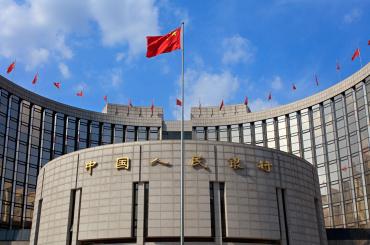
The rise and fall of China’s overseas lending
China's trillion-dollar lending boom to the developing world has followed the same boom-bust pattern as past sovereign debt cycles, leaving many low-income countries trapped in a silent debt crisis with little prospect of coordinated relief.
-

Ray of hope? The rise of solar energy in China
China’s solar subsidies triggered innovation and learning-by-doing that dramatically lowered global solar costs while generating domestic economic gains large enough to outweigh the subsidy costs, showing that green industrial policy can simultaneous...
-

Technology diffusion: The role of venture capital, universities and China
Josh Lerner discusses why there is a gap between innovation and impact, and how policymakers can speed up technological diffusion.
-

The hidden cost of China's bureaucratic promotion system: Fragmented domestic markets
China’s bureaucratic promotion system unintentionally incentivises local leaders to restrict trade and underinvest in cross-jurisdictional infrastructure with provincial peers, fragmenting the world’s largest domestic markets and undermining long-ter...
-

Mismeasuring learning: Beware of psychometric test scores
High-frequency data from a large early childhood intervention in China indicates that skills develop through the emergence of qualitatively new abilities and stochastic fluctuations, rather than as higher levels of a fixed trait, challenging the prac...
-

How China became the world’s factory: Trade, industrial policy, and growth
China’s rise was powered by an export-led growth model reinforced by trade liberalisation, place-based and industrial policies, massive infrastructure investment, and a governance system that strongly incentivised local growth.