

machine learning
-

An improved nighttime-lights dataset for development research
A new adjusted and harmonised satellite nighttime-lights series for 1992–2023 tracks local development in the Global South more accurately than the off-the-shelf data – especially in panels and at fine spatial resolution.
-

Qualitative interviews at scale: A new method with an application to aspirations
We develop a new method to analyse open-ended qualitative interviews with large samples, and apply it to interviews with Rohingya refugees and Bangladeshi hosts on parent’s aspirations for children, revealing dimensions of aspiration that standard su...
-

When should big data and algorithms be used to determine programme eligibility?
Although machine learning models using mobile phone data can make poverty targeting faster and more cost-effective, traditional survey-based methods remain more accurate. The optimal approach therefore depends on striking the right balance between co...
-

Measuring poverty using mobile phone data: Implications for targeting and impact evaluation
In settings where reliable data on poverty is difficult to come by, non-traditional data sources such as mobile phone metadata has the potential to fill data gaps. New research on a cash transfer programme in Togo reveals that mobile phone data enabl...
-

The uneven reach of the state: Using machine learning to map local state presence
How can we estimate state presence in areas where direct measurements are lacking? New research offers a solution to measuring state presence using machine learning techniques.
-

Using machine learning to detect corruption
When governments harness public budget data and machine learning, they can better predict the incidence of local government corruption.
-
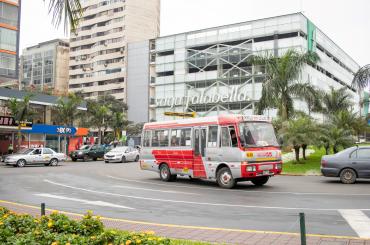
Commuting to opportunity? How transport infrastructure shapes students’ college decisions in Peru
The introduction of mass public transportation systems in Lima, Peru, connected neighbourhoods, reduced commuting times, and increased access to college
-
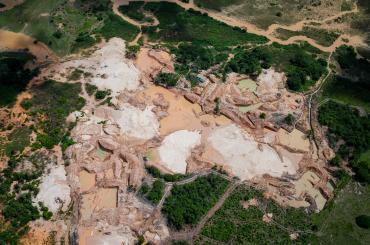
Using monitoring technologies to protect the environment: Evidence from Colombia
Governments can use satellites and machine learning technology to reduce illegal activity