

Peru
-

Two barriers to household recycling – and how to overcome them
Field experiments in Lima, Peru show that correcting social misperceptions and sending SMS reminders can significantly boost recycling participation.
-

When ethnic diversity helps development
Ethnic diversity is often blamed for poor development outcomes. New evidence from colonial Peru shows that a history of economic exchange can sustain inter-ethnic cooperation and local trade in the long run.
-

How cold weather increases domestic violence in Peru
Cold snaps increase domestic violence in the Peruvian Highlands by reducing agricultural income. Policies that improve households’ resilience to agricultural income losses can help mitigate this effect.
-

Unlocking high-value agriculture in Peru
Peru has rapidly grown its high-value agriculture sector. The former Minister of Production, Piero Ghezzi, tells us how the government worked with the private sector to make this happen.
-

Are elite schools for me? How role models can narrow the aspirations gap
Can one student’s experience influence the educational decisions of those that follow? Evidence from admissions to elite schools in Peru shows how policies that make success stories visible can have multiplier effects.
-
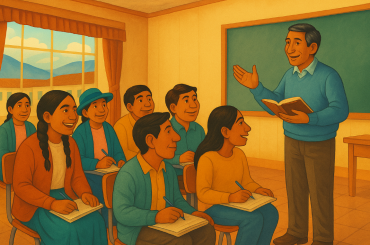
Teaching teachers to teach: Lessons from a large-scale coaching programme in rural Peru
Every year, developing countries spend considerable resources on training teachers—yet these efforts often prove unfruitful. New research from a large-scale, pedagogy-focused teacher coaching programme in rural Peru offers promising results for achie...
-

One Laptop per Child: Lessons from a long-term follow up
Long-term research on the One Laptop per Child programme reveals that providing laptops to students did not have a positive impact on educational outcomes, likely driven by lack of effects on cognitive skills and limited classroom adoption.
-

How Peru transformed natural resource wealth into local economic development
Peru’s experience, where transfers to local governments were funded by natural resource tax revenues and had a host of economic benefits in non-extractive areas, highlights the importance of fiscal redistribution in taking advantage of natural resour...
-

Behavioural strategies to reduce teacher sorting in Peru
Low-income students are more likely to attend schools with less-qualified teachers widening achievement gaps. The Peruvian government’s novel and low-cost nationwide strategy was successful at encouraging highly qualified teachers to apply for jobs i...