

Agricultural technology
-
Boosting farmers' profits
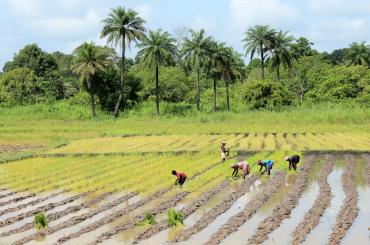
Credit, subsidies, and cash transfers can improve yields and revenues for smallholder farmers in low- and middle-income countries, but translating these gains into higher profits proves far harder. The evidence suggests that credit works best not as a standalone intervention but when paired with new agricultural technologies that give farmers something genuinely worth investing in.
-

What’s holding back agriculture in Ghana?
Despite a long decline in agriculture's share of Ghana's economy, the sector remains vital, yet productivity gains are undermined by partial and uneven adoption of modern technologies across seeds, fertiliser, mechanisation, irrigation, and digital s...
-

Ethiopia bet big on fertiliser plants. Did it pay off?
Ethiopia’s fertiliser blending initiative shifted farmers to new products but failed to boost yields or incomes – underscoring that fertiliser supply reforms must be paired with broader investments in seeds, water, soils, and markets to raise product...
-
Intensification or expansion? A new approach to measuring agricultural change
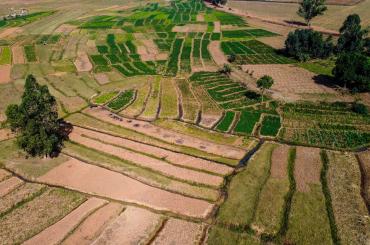
Drawing on a randomised controlled trial among rice farmers in Nigeria, we introduce a new method for linking village-level interventions with high-resolution earth observation data – which captures spatial variation in how new technologies spread an...
-

The two faces of agricultural modernisation: How modern farming causes conflict
Agricultural modernisation in Brazil has driven economic growth but also intensified land inequality and redistributive conflict. As capital-intensive farming expands, it displaces rural communities and fuels organised land occupations—highlighting t...
-

What is the role of small farms in the future of agriculture?
Despite decades of investment, innovation, and policy reform, yields on African small farms remain significantly below those in high-income countries—even when similar technologies are used. Which policies are most effective in boosting productivity in smallholder farms?
-

Lowering travel costs to agro-input retailers boosts fertiliser adoption
The most remote villages in Northern Tanzania pay 40–55% more for fertiliser than villages with better market access. Halving travel costs leads to a nearly fourfold increase in fertiliser adoption.
-

How peer learning improved agricultural technology adoption in Tanzania
Previous research finds that peer-to-peer learning can successfully promote technology adoption, making participatory approaches that emphasise iterative, two-way communication now common in agricultural development. We examine whether this peer lear...
-

How misinformation and mismatched expectations reduce adoption of improved seeds
Often presented as game-changing solutions, agricultural technologies like improved seeds or fertilisers can lead farmers to adopt one at the expense of others, only to disadopt when the expected gains, based on overly optimistic assumptions about re...